Friday, November 20, 2009

Rethinking Domesticity in Girls' Lives and Play Cultures

This week I've been thinking a lot about the changing (and not so changing) role of "domesticity" (traditional notions of femininity, home/private sphere, keeping house, proper etiquette, gender roles, aesthetics, etc.) in the lives of girls and women, particularly within the realm of leisure. This is in large part due to the fact that my lecture this week was on "technologies of empowerment," looking at how women are using traditional and new technologies -- often in combination -- to challenge status quo, gender politics, and gender role expectations...as well as to construct new ways of engaging with social institutions (such as markets) and techno-politics. A key theme was how technologies (& technological practices) that have traditionally been designated as "feminine" and/or associated with women (such as looms and knitting needles) share many of the same formal characteristics as key digital technologies, including computer software and networks. While I feel optimistic and very enthusiastic about these developments, at the same time I can't help but be reminded of the very different ways many of these same traditionally feminine technologies have historically appeared within girls' play culture as modes of domestication and containment. Now I'm left wondering how these two areas might be reconciled -- on the one hand to add some perspective to the optimism that surrounds handmade/DIY feminist culture, and on the other hand to produce a more progressive approach to a tendency within girls' play culture that can otherwise seem quite regressive.

I think the best way to start this discussion is to first provide a better explanation of the contents of the above-mentioned lecture. As I may have mentioned here before (and as indicated in the sidebar), I'm currently teaching a fourth-year seminar course called "Women and New Information Technologies" at the School of Communication, SFU. This week, I presented some of the themes raised in Sadie Plant's "Future Looms: Weaving women and cybernetics" (here's a link to a GoogleBooks excerpt), by examining both the parallels between traditional women's craftwork (such as weaving, embroidery, knitting, etc.) and computing technologies, as well as the ways in which these traditional practices are currently being reclaimed and reinvented by young women as part of a variety of cultural practices, business ventures, and forms of feminist community-building and activism. Here are a couple of examples to illustrate what I mean by this:

Handmade Nation
A key example (in my lecture at least) is the Handmade/Arts and Crafts movement, which links with contemporary feminism in a variety of ways, not least of which is the potential the movement contains for alternative economic models. One of the sources we "looked at" (although I couldn't get a hold of a full licensed copy in time for a screening - it just came out 2 weeks ago!), was a new documentary by Faythe Levine called Handmade Nation, which chronicles the resurgence of traditional craft-making across North America. Levine also co-authored a companion piece with Cortney Heimerl last year entitled Handmade Nation: The Rise of DIY, Art, Craft, and Design, published with the Princeton Architectural Press. The film and book focus on interviews Levine conducted with crafters and artists across the US, the vast majority of whom are women who have combined traditional practices (albeit oftentimes with a very contemporary spin, e.g. skull and cross bone doilies) and new info technologies to establish both a new crafting community and burgeoning neo-artisan economy. As described on the publisher website:
Participants in this community share ideas and encouragement through websites, blogs, boutiques, galleries, and craft fairs. Together they have forged a new economy and lifestyle based on creativity, determination, and networking.


Open Source Embroidery
Another example I looked at in this lecture is a project/art collective called Open Source Embroidery. Founded in 2005 by postdoctoral researcher Ele Carpenter, the project was created to explore and support artists engaged in investigating the relationships between embroidery and programming. As the website describes, Open Source Embroidery is "based on the common characteristics of needlework crafts and open source computer programming: gendered obsessive attention to detail; shared social process of development; and a transparency of process and product." Very interesting. Here's an excerpt from an article in Wired about the project:
The movement brings together knitters, embroiderers and quilters who see parallels between the way they create their crafts and how open source software creators share their ideas. At the BildMuseet at UmeĆ„ University in Sweden, an exhibition — also called Open Source Embroidery — showcases artworks that use embroidery and code as a tool for participatory production and distribution.

“The idea of collaboration has been made cool by open source software,” says Carpenter, the curator of the exhibition. “But artists have been working like this for a long time.”

Even the differences between needlework crafts and open source software are alike, she says. Embroidery is largely dominated by women, while software is created mostly by men, she says. In embroidery, tiny stitches come together to create a pattern visible on the front of the fabric, while its system is revealed on the back. It’s similar to how software is created.


There is of course some argument about how "alternative" these practices really are, and some good feminist challenges to the purported empowerment and progressive politics (if any) that they ultimately bring about. But from what I've seen, they do indeed seem to represent an alternative to (rather than support of) the status quo, one that contrasts in important ways with the liberal feminist approach of making space for women within existing structures/institutions. By creating new spaces and new structures within which women and men can redefine workplace norms, opportunity, and expectations, and thereby challenge outdated (patriarchal) structures -- not from within, but rather on their own terms -- these practices do become political in ways that extend far beyond leisure or a nostalgia-laden aesthetic trend. As such, they could indeed represent a key facet of an emerging political movement.

And while Handmade Nation and sites like Etsy (and the surrounding debate about women and Etsy) and the like focus specifically on craft work, there are also a number of links between Arts&Crafts and various other forms of DIY and the hidden productive practices of women and girls -- from music and film production, to girl's bedroom culture, to open source and hacker cultures. There are also some very interesting overlaps between craft/DIY and women's lifestyle sports subcultures, particularly in sports that have traditionally been male-dominated, such as snowboarding (e.g. Holly Thorpe's article on female snowboarding "feminizing" their gear with hand-knitted toques and other customizations).

In giving some further consideration to these themes and ideas, however, I've become quite caught up in the paradox that emerges when the discourses of empowerment/feminism/community contained within much of the handmade/DIY movement are contrasted with feminist discussions of girls' play. Here, I'm thinking about all the research into girls' commercial culture and toy culture that reveals the enormous emphasis that has been placed on instrumental activities, domesticity and the development of traditionally feminine skills as the most "appropriate" use of girls' leisure time. Within girls' culture, the emphasis placed on tea parties, play kitchen sets, sewing and the like, all become examples of how girls play is shaped by an ethos of "domesticity", which operates both as a ideological justification for girls' confinement within the home (with indoor play & domestic themes portrayed as natural choices for girls' play), as well as the systematic instrumentalization of their play and leisure (play that is geared towards a purposive end (namely of training girls to be future mothers/wives) rather than "play for play's sake").

So my question has become - can these two areas be reconciled within a feminist theory of/approach to play, and if so how?

Starting Out Points
- Arts&Crafts is a key area of kids' toy/play culture, with girls' targeted with a plethora of sewing/stamping/beading/knitting games - ranging from plastic pretend kitchen sets and sewing machines, to semi-functional Easy-Bake ovens and very basic Singer sewing machines, to more-or-less fully functional embroidery sets and the like. While the marketing for these objects is often quite stereotypical, you do see quite a bit of them promoted as educational toys or "alternative" toys as well. Are there links between the current Arts&Crafts movement and the tradition of arts&crafts in kids' (and primarily girls') leisure? If so, where and how are these links promoted? How could girls' toys/leisure be more firmly incorporated into the discourses of empowerment enjoyed by the older girls and women who are engaged in this subculture?

- If purposive leisure is indeed a better conduit into the emerging structures of the "information society" - artisan markets, open source, immaterial labour, the blurring of traditional boundaries between play/work public/private - are we in fact seeing an expansion of traditions established within girls' play culture and women's "leisure" (always a contested category as women have historically enjoyed less leisure, engaged in more purposive leisure, and have more often multi-tasked chores and leisure) into the lives of boys and men?

- Read through the work done by Ludica - this group has done some fascinating work examining some of these themes, particularly in regards to girls' play, gendered relationships with space (domestic, public and digital) and digital games. For example, their article A Game of One's Own examines conceptions of play space from a female perspective.

All I have for now are some preliminary ideas - there are obvious overlaps and obvious starting points, as you can see from my rudimentary list above, but at a theoretical level the empowering dimensions of craft work do seem to trouble my emerging definition of "domesticization" as the form of social rationalization currently taking place within children's digital play (extending from girls' play traditions into boy's play as well through virtual worlds and transmedia intertexts that transform play into a form of consumption/affective labour). Perhaps it is within the vocational/non-alienated labour implications of women's craftwork that its potential emerges??? Perhaps it is the lack of alternatives within girls' commercial play culture (as it is constructed within commercial and social discourses only - I do not mean to ignore girls' and parents' very real ability to choose toys outside of the pink aisle) that makes the emphasis on purposive play so limiting??? More to come as I think these issues through a little more, and in the meantime I welcome any points of discussion or challenges in the comments section below that might be of use in making sense of these questions.

If this is of interest, you might also want to read a previous post I wrote on my "under construction" idea about domesticization as a parallel system of social rationality within modern society.

Here are some examples of the kinds of girl's toys I'm talking about:


Tuesday, November 10, 2009

The Hidden Playground: New Article in The Escapist

This week's issue of The Escapist is on the theme of "Healthy Living," and explores various ways that gaming can be a part of (rather than a detriment to) a healthy lifestyle. I'm happy to have my article on outdoor play, the free-range kids movement, and portable/ARG game hybrids included in what has turned out to be a fascinating issue that covers both a number of serious health issues (obesity, vitamin D deficiency) relevant to gamers & non-gamers alike, as well as a number of ways that games (e.g. exer-games, Wii, portable gaming devices, fitness games) can be used to promote fitness, physical therapy and outdoor play.

Here's an overview of the contents with direct links to the articles:
Editor's Note by Jordan Deam

The Hidden Playground by Yours Truly

Gamer-Size Me by Craig Owens

Step Into the Light by Chris LaVigne

Waggle Therapy by Lauren Admire

I mentioned awhile back that I was working on a longer article examining how an emerging game genre combining portable game devices, wifi and some of the traditions established within alternate reality games (ARGs) might be used to promote free-range and outdoor play...and this is it. In the article, I propose that while many parents and kids would like to reclaim urban and suburban space for outdoor and "free-range" play, decades of moral panics, housebound latchkey kids, sedentary bedroom culture, stranger danger and family unfriendly urban design have depleted the play opportunities available in many (most?) neighborhoods and city blocks. Of course, given enough time and freedom, kids will find ways to play almost anywhere. But for right now, lack of practice along with the enduring social construction of "public space" as unwelcoming to the kinds of shenanigans most conducive to free play, might combine to make that reclamation a bit trickier than some parents/kids might expect.

My article examines how games like The Hidden Park (for iPhone) and Treasure World (for the Nintendo DS) (while not a substitute for non-digitally-enhanced outdoor play) might be used as "seeing stones" through which public spaces can be "opened up" to play, and made available for those more imaginative and autonomous forms of play that kids enjoy and benefit from most. By breaking down existing definitions of what an urban or suburban landscape is, how it should be experienced and what kids are expected to do there, I argue that these types of games put forth "a direct challenge to the idea that public space is inappropriate and dangerous for kids." Once this space is opened up, so is the play potential.

I use the motif of the "seeing stone" in reference to a number of great fairy tales and kids' books that focus on adventure and the invisible magic that exists all around us, which also acts as fuel for imaginative make-believe play and games. Here's the description from the article:
Imagine this emerging genre as the digital equivalent of a "seeing stone." The seeing stone shows up in a number of modern fairytales, including Tony DiTerlizzi and Holly Black's The Spiderwick Chronicles and Neil Gaiman's Coraline. A primitively carved totem, its key feature is the eye-sized hole in its center. By looking through this hole, the children in these stories are able to see aspects of the world that are usually invisible to humans: magic, fairies, portals to other dimensions, ghosts and goblins and even other people's souls. The idea that the world around us is much more magical than it seems has clear links with childhood traditions of outdoor play and make-believe.


I also wanted to provide some links to some of the sources mentioned or that inspired the article, and here's as good a place as any:

Lenore Skenazy's FreeRange Kids

Michael Chabon's Manhood for Amateurs: The Wilderness of Childhood

Roger Ebert's Raising free-range kids

Henry Jenkins' Complete Freedom of Movement

Kotaku interview with Miyamoto

Hope you enjoy the article!

Monday, November 02, 2009

Transmedia Expansions from Fairies to Fairy Godmothers

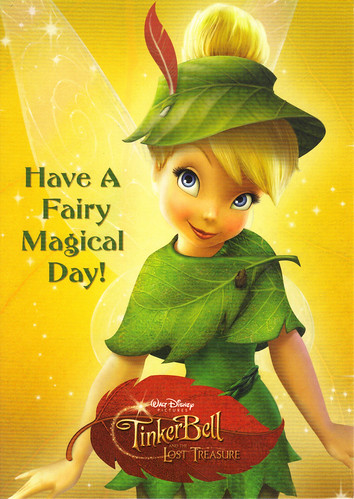
There's been so much "buzz" around the Disney Fairies, Tinkerbell and Pixie Hollow these past couple of weeks I don't even know where to start. I was initially thinking of posting about Tinkerbell's recent "makeover" (which actually isn't a makeover but rather just a new additional outfit she appears wearing in the new Disney Fairies direct-to-DVD Tinkerbell and the Lost Treasure), perhaps in comparison with other much discussed revamps of girls' culture characters Dora the Explorer, Strawberry Shortcake and Rainbow Brite. But style is just the tip of the iceberg when it comes to the new media powerhouse emerging out of the Fairies/Tinkerbell/Pixie Hollow media brand, which just seems to keep growing in both reach and success since the site's launch a couple of years ago.

Some of the more interesting/important developments right now revolve around the launch of the second Tinkerbell-based DVD, which of course comes with its own Nintendo DS tie-in game, both of which in turn tie-in to the Pixie Hollow virtual world. According to the press release, the new game creates even more linkages with the virtual world than the previous title (i.e. the original game/DVD released last fall). Considering how much of the virtual world (features and activities) are now exclusive to paid subscribers, this likely also ties in nicely with the velvet rope marketing model the site has increasingly oriented itself toward to accord with the VW's gains in population base and popularity. Here's an excerpt about the tie-in features taken from the press release (as published on Business Wire:
Unique to this year’s game is the ability for players to create and personalize up to five of their own fairies, from facial features to hair accessories, each with different talents focusing on tinkering, light, water, animal and gardening. One of those fairies can be uploaded onto the Disney Fairies Pixie Hollow (PixieHollow.com) virtual world from Disney Online, where visitors worldwide have created more than 22 million fairy avatars. Players are then able to use their DS fairy to go on quests, play talent games and gather items within the PixieHollow.com world.

Players can also embark on an online quest that ultimately unlocks a special item on both platforms and they can add ingredients gathered in the DS game to their collection on PixieHollow.com. The two platforms are now linked through up-to-date news and polls, dispatched from the online world directly to DS.

In addition, Disney Fairies: Tinker Bell and the Lost Treasure includes DGamer, the online community exclusive to Disney gamers on Nintendo DS, allowing players to connect with others and unlock Fairy-themed items in their DS game.

Interesting to see that Disney is still updating DGamer - I haven't checked in on that game/site in awhile, it might be time for a return visit to see if things have improved or expanded much since its soft launch last year. But anyway, without seeing them firsthand, the cross-platform features sound a lot like the Club Penguin virtual world/DS game campaign built around Secret Agents that emerged soon after Disney acquired the site. I think it might be time for a more formal comparison of the ways in which these tie-ins function, are marketed, and impact the virtual world space/community.

Another esp. noteworthy Tinkerbell news story that also (surprisingly, or perhaps even shockingly) ties into the launch of the Tinker Bell and the Lost Treasure DVD is the UN's announcement naming Tinkerbell an "Honorary Ambassador of Green". And then the UN screened the film at its New York headquarters, making it the site of the DVD's "world premiere". Bizarre! Here's an excerpt from the UN press release:
The United Nations today named the Disney animated character Tinker Bell an “Honorary Ambassador of Green” to help promote environmental awareness among children. The announcement came just prior to a screening at UN Headquarters in New York of the world premiere of the Walt Disney animated film, “Tinker Bell and the Lost Treasure.”

“We're delighted Tinker Bell has agreed to be our Honorary Ambassador of Green,” said Kiyo Akasaka, Under-Secretary-General for Communications and Public Information. “This beloved animated character can help us inspire kids and their parents to nurture nature and do what they can to take care of the environment.”

Today's event is intended to promote environmental awareness in the lead-up to the UN climate change conference in Copenhagen in December, where countries will aim to 'seal the deal' on a new global agreement to curb greenhouse gas emissions.

Okay...I had no idea that the UN was now part of the Disney promotional machine. I mean, using a beloved children's character as a kid-targeted "ambassador" is only ambiguously different from using a celebrity or sports hero, and there are of course promotional undertones anytime a media persona (real or fictional) gets involved in a campaign like this. Identifying Tinkerbell or any other Disney character built around the promotion of pro-environment values is in itself not so troubling - I've had these discussions with Amy Jussel before about using children's media characters to promote healthy foods. and overall I'm still open to the idea of using icons and themes from kids' culture for pro-social, pro-health and pro-environment type purposes. But all of that aside, it's the fact that this particular initiative announcement came as part of the promotional spectacle of the movie's (and game, books, toys, etc.) "premiere" (i.e. release date) that really stands out as odd, off and unworthy of the UN. This announcement is much too deeply embedded in the marketing of the film and much too in conformity with Disney's promotional interests to be seen as anything but a new and disturbing form of product placement.

Can't get enough Tinkerbell news? Disney Fairies is also an iPhone app now. Hmmm - there sure are a lot of kids' games coming in as iPhone apps. Looking forward to reading some research on parent/child co-use of iPhone devices for (cooperative?) gaming. ************Nov.5th update: And on that note, here are some emerging statistics courtesy of MarketingCharts, which indicate that: "More than 59% of US mothers who own an iPhone say they let their children use it, and 61% of these moms download games or educational content specifically for their kids." Hmmm - and what about dads?********

Not that Disney is the only one playing the transmedia game these days. The examples are endless. A recent, and also fairy themed venture Jan Bozarth's "Fairy Godmother Academy" book series/transmedia brand. As Omar L. Gallaga writes in yesterday's Statesman, Bozarth's book deal with Random House resulted from how well argued and organized her online/multimedia tie-ins were in her initial proposal; tie-ins that came with an existing media team at the "ready to begin work." Gallaga writes:
The staff is made up of designers and artisans whom Bozarth has worked with for about 15 years — the people she says she could trust to translate her detailed fantasy world into what Bozarth and the team call "Transmedia."

Explains Mario Champion, FGA's creative and technical director, "'Transmedia' is a shorthand way of saying the way kids play in a connected age. It's not just that it's digital — it's that it's connected."

Such connected media might mean a part of the Web site where girls can ask questions about or communicate with characters from the books, design their own virtual clothing or participate in a "Million Girl Choir," downloading audio tracks created by friends to combine with their own for a digital duet.

The ambitious project, which the team says will be rolled out over several years as the books are published, combines elements of massively multiplayer online games like "Club Penguin" with design tools, interactive music and video, and activities meant to get readers off the computer and into real-world activities with friends.

The interviews with the designers is well worth the read -- their comments tie into the whole girls' games discourse quite nicely and they have some interesting things to say about making space for UGC, craft and dress-up play, etc. But I can't help but sigh at the suggestion that transmedia is something new or innocuous or kid-based. Kids might play well with transmedia intertexts, but let's please not blame them for multi-modal branding. And the vast majority of the time the texts themselves are designed to maximize cross-promotion and incite multiple sites of consumption, rather than truly experiment with or tap into the opportunities contained within children's transmedia play practices.

I do like how the team presents its vision for the site/book/game, but only a thorough review of the contents themselves will tell if this is just another promotional strategy or something that's actually unique and postmodern. In particular, I think that future reviews (my own or yours) of the Fairy Godmother Academy's online components should focus on testing the following three statements that appear in Gallaga article:
"We're aiming to create a place where the books are a jumping-off place into this world of play and discovery, and of girls finding their own wisdom." ( - Ann Woods, art director of the Web site)

Here, the focus should be on opportunities for UGC or inter-user communication, flexibility of the system, opportunities for uploading original materials without usurping the kids' authorship or IP. Are kids able to engage with and subvert the source materials? If not, how are the books serving as a jumping off place. Where's the "discovery" occurring and what parameters are being placed on it?
In one example of the team's work, girls have the ability to not only choose virtual clothing, but to design it themselves.

What does 'design it themselves' amount to? Are we talking customization or real opportunities for original creations. If it's the former, what is the range of freedom and creativity afforded by the design/options available. What's the palette, what "sizes" are available, etc.?
"It's an intriguing balance," Woods said. "We never dumb down to girls."

This one's a bit harder to give a brief guideline for - what are some good ways to question or identify how games/sites "dumb down to girls" in their language and design. Then again, this might be the most intuitive one to detect. I'd love to see/read some good descriptions of what dumbing down is and what it looks like, so I'll leave this one open.


********On a totally different note:
Also, has anyone been watching the Jim Henson Company's new kids' animated TV program Dinosaur Train? Catchy tunes, cute characters, and some cleverly integrated educational content - I'm sure there are a zillion commercial tie-ins current or in development to consider and critique here too, but in the meantime the series itself seems delightful, intelligent and very Jim Henson-esque. Definitely worth keeping an eye on. Here's a clip to start the week off on a foot-tappingly good note.

Friday, October 16, 2009

New Article in The Escapist

Be sure to check out this week's issue of The Escapist, which explores the various acronyms associated with gaming and the game industry, under the theme title "Alphabet Soup". Alongside some great articles on MMORPGs, IGDA and TGI (Triangle Game Initiative), is an article I wrote on the ESRB and the many challenges it will need to overcome if it is to remain relevant in a web 2.0, technologically converged, digitally distributed game environment. Here's an excerpt:
Through partnerships with the National PTA and a website overhaul, the ESRB has made real inroads toward helping parents make informed choices for their gamer children. Awareness levels are higher than ever, and current studies show that most parents find the ratings "useful." A recent survey by the Kaiser Family Foundation found that only eight percent of parents list videogames as their main source of "concern about inappropriate content," whereas 32 percent list television.

All signs seem to indicate the ESRB has hit finally its stride, but that's likely not the case. While it's commendable that the ESRB has rectified its past mistakes, here in the present the unaddressed challenges keep on stacking up. Current trends in game technology, design and distribution pose serious threats to the ESRB's newfound relevance. Many of these challenges have already been discussed elsewhere, but when you put them all together you start to appreciate their immensity.

The main challenges I explore in the article include the spread of online content and UGC, converging game formats (though a large section of this portion unfortunately didn't make it to the final version), and new distribution systems. I had also hoped to have enough space to talk about indie gaming, but it ended up as just a tiny footnote, and something that I will definitely need to elaborate on in a separate post or article in the future. Not that I needed more fuel for the fire in this particular piece - it attracted a sizable response on the article's "Comments" forum, as well as the forums of a couple of other sites where the story got picked up, most of which reveal just how controversial and touchy this particular subject still is within the game community.

Unfortunately, much of the feedback I received communicated a fundamental misunderstanding that I was trying to promote an expansion of the current ESRB rating system to online interactions...which couldn't be further from the truth. As I've argued before, the current system does not have the flexibility and responsiveness required to keep up with contemporary trends in gaming, and slapping an E or M onto an online game (or online features os a game) would be pretty pointless (and potentially misleading). But that doesn't mean the ESRB itself couldn't try to come up with some sort of new approach to help parents make informed decisions about the different types of online/chat moderation systems available, the varying levels of freedom afforded by different UGC games, or at the very least enable parents, children and designers to exchange information in a more direct and adaptive way. They do, after all, have the full cooperation of the mainstream game industry, and unique access to mechanisms and programming that are otherwise (supposed to be) off-limits to would-be raters. But anyway, as the title of my article ("Obsolescence Pending") suggests, with all the time and energy that has been spent defending the current framework, it's doubtful that a massive restructuring is likely to occur anytime soon....leaving the door wide open for an alternative service or system to come in and provide something a little more comprehensive and hopefully much more responsive to technological advances, evolution of the player community, etc. Especially as a larger and larger portion of games and game content are not rated by the ESRB, and the ratings are restricted to a shrinking proportion of the overall games market (although as one commentator, SaintPeter, rightly pointed out, as long as there are single-player games there will be a place for the ESRB ratings, which is very true and highlights the technological determinism of my overall argument).

By far one of the most interesting and useful outcomes of the article for me and my own thinking about these issues was the feedback I received that provided preliminary sketches and suggestions about how this alternative system might work. While the article attracted a LOT of disagreement and challenge from the forum communities, I also received some great feedback on additional issues that would need to be included to make my assessment of the ESRB more exhaustive, as well as a number of ideas for alternative systems. For example:
slopeslider:
I have a few Ideas.
For online interactions there could be a new rating category.
Moderated/unmoderated user-generated content.
Moderated/unmoderated player chat
For multiplayer online games maybe a special moderated chat line for kiddies. It would be moderated, but the rules would be soo strict that it wouldn't be a problem moderating 2% of the overall game chat. I know if they had this most people A. dont want to talk to little kids and B. don't like super strict speech guidlines. That means they wouldn't have to moderate 1 million people chatting online at once, more like 10,000.

I agree - even a simple system of moderated/unmoderated would be a great place to start. I know that individual games often include a self-description, but a standardized categorization system would be much more immediately useful to parents. This theme was taken up and elaborated upon by BehattedWanderer:
BehattedWanderer:
That actually doesn't sound like a bad Idea. If they were to display a prominent warning about 'User made un/moderated content', specifically stating that 'users of varying ages can createj online content, which may result in inappropriate content being generated and played before it attracts moderator attention', then it would go a long way towards helping to assess the interactions that they cannot (but probably can hazard a guess) predict.

What they would need to do is put out a psa, or something, a short commercial, to be aired on the big channels--wouldn't have to be long, just a minute or so, alerting parents to the new type of content, and to look at the rating on the box, and that they should use their judgement when purchasing--Games rated T and M might feature more mature subject matter in the online play from both adolescents and adults, which would expose their children to such.

To which I responded:
So clever. What would you think if the system also enabled users to actively submit their content for some sort of peer-reviewed or moderator rating? For instance, if you think your game level should be rated E, you could flag it so that it gets some special (or more immediate) attention - perhaps through some kind of volunteer (or nominated, if the community is large enough) parent-gamer group. Parents could then set up child accounts that can only access content confirmed as appropriate. Or something along those lines.

To which BehattedWanderer replied:
I agree with you up to the point of peer review--that's all well and good, and could work pretty well, as long as there is unbiased review as well--it randomly picks someone from the review board (whom you don't know), and gives you a rating and a review from there, if not a quick chop from the cutting axe for trying to post an overly sexually-themed level in the 'E' category. Each review board is accompanied by one moderator, just to ensure fairness. After two or three of these random and anonymous reviews by the peer review or moderator groups, the rating is affirmed, and put into it's appropriate category.

The part I have a bit of issue with, however, is the latter part--specifically the child accounts. Parental settings are fine and dandy, and work on occasion. But the issue with that is that children are devilish when the want to be, and most can figure out how to either get around the parental controls, or flat out just change the parental control settings so that they have their own access. What's more, for every child account that is created and ahered to, dozens more won't even be created, leaving unfiltered settings for the child to browse. Most parents (I'm talking about those not that familiar with online play, mostly the older parents) wouldn't know to filter the content online, not expecting there to be such content so readily available within the game. It's for that reason I propose the ads--just to draw attention that their children might be accessing this kind of content without their knowledge. It's that age old idiom of "knowing is half the battle"--most aren't even aware there's an issue of unrated and unfiltered content.

Very insightful points and nuanced understanding of the parent-child-technology relationships involved. Another really great recommendation that draws on the idea of crowd-sourcing was provided by Nutcase, who describes:
Nutcase:
In this day and age, you could derive a quite accurate community rating by picking a number of people at random who have bought the game, and asking them to fill a ratings questionnaire. This job would naturally fall to game vendors because they are the only ones who know who has bought what. To increase confidence in the ratings, stores like Amazon could offer this only to people who have bought the game two weeks ago or more. Steam could go further and actually observe that the person has played the game for X amount of time.

Well, this kind of rating might have trouble catching spikes of content that come late in the game (70 hours into a JRPG...) or by random (an unmarked location in a sandbox game you might find or not...) but it would produce good ratings for the great majority of games. One can think of additional mechanisms specifically to deal with these cases.

This system would follow the actual audience attitudes closely without getting "stuck" in the morality of any given group. Also, the system would not need to flatten the results in one rating (though it could also do that for at-a-glance reading). Most of the actual data could remain browsable online with various filters, with only identity-compromising information stripped. The implications of half the audience rating something AO and half rating it T are quite different from everyone rating it M, though dumb averaging would make these two cases look the same. It's also to be expected that ratings vary depending on geographical area; for most people the ratings would be more accurate if they could use ones from their own area instead of all ratings.

Very true - getting the vendors/distributors involved would be key, and since it involves building consumer involvement and potential loyalty, and providing a service to both players and developers, it may not be all that difficult to get them on board. There may be more, I haven't had the time to go through the last batch of comments, but I think there's enough even here to begin envisioning an alternative framework. As Sal Humphreys posted on my Facebook wall:
I also think in the world of user-generated content - which is too vast to monitor - it might be that user-generated ratings have a role to play - if you develop a culture of rating, and have enough people rating, then you have a system that generates the information necessary to make informed choices.

Indeed!

Interestingly, this is all in harmony with a model currently being developed/promoted by independent game designer Daniel Kinney with his TIGRS rating system. I'm sure there are other models out there as well, just waiting to be taken up by the player community and industry. For instance, a number of non-indie developers are also working on incorporating user-based moderation systems and game reviews into online communities/hubs for certain games...an expanded version of these systems that includes more of a focus on tagging content as kid-friendly (or not), in a more systematic way, is another step in the right direction. Even something as simple as the self-rating system that Metaplace is using, which in fact does draw on ESRB-style ratings categories, seems viable as a starting point (no way to rate people/chat, however, as my students were unlucky enough to experience firsthand during a group discussion a few weeks ago). Most of these solutions do leave room for mistakes, of course, but could nonetheless provide an initial bedrock of advice and support for parents to make better informed decisions. What I'm particularly interested in are models that draw on kids and parents as well to provide content ratings and evaluation of ratings...after all, they're the ones actually using the ratings (and not just as a political tool either). This whole experience has given me a lot to think about, sprouting some wiggly little project ideas in the back of my mind.

Wednesday, October 14, 2009

The Kids' Comic Space

Part of the digital literacies discussions that I've been following of late have centered on the long-discussed (but not always applied) potential associated with using comics for intertextual, heavily visual, narrative formats through which kids can explore cultural themes, literature and learning. It's a fascinating idea that draws on the long history of comics, picture books, and transmedia intertexts within children's culture...while tapping into children's actual leisure practices in a way that transcends the usual boundaries between cultural categories (high/low culture, literature/entertainment, etc.) and gives some serious consideration to the value and possibilities contained within the re-emergence of comics as a literary form.

Not that comics have ever really gone anywhere, but they've certainly resurfaced within the mainstream in a big way these past few years -- a way that hasn't really been seen since, well, i'm not really sure when! (golden age? silver age?). I remember that Scholastic initiated a big push toward graphic novels and comics a number of years ago (e.g., click here to find out more about the launch of their Comix line back in 2005). And certainly, the emerging research on kids' reading habits within digital games and online environments is relevant to this discussion as well (e.g., Jackie Marsh's work on kids reading and writing in virtual worlds). Obviously, there are many more connections between this body of work and the research I'm doing on kids' games, and some cool possibilities of merging the two areas...not just thematically (which has been done before), but "ludic"ally as well. I still have a lot of catching up to do, and until my PhD is "in hand," this is definitely on the back-burner. But as a former comicbook collector and current reader of graphic novels (well, TPBs in my case), this whole realm definitely draws my attention.

Some neat places to start for finding out more about the kids' "comics space," and exploring its increased presence within both educational curriculum and kids' digital culture:

James Bucky Carter's En/Sane World - a repository of info and resources on "Sequential Art Narratives in Education (SANE)". His site includes lots of links and ideas for educators, as well as a variety of sources on "multigenre, multimodal, or otherwise "New" literacies."

The Online Visual Literacy Project - not just about comics, but appears to have some interesting background literature.

A short but sweet archive of comics-related posts on Media Macaroni, which includes a list of comics that the "cool kids" read and a great post about (as well as my first introduction to) Babymouse.

This excellent reading list of kids' comics posted by Jonathan Liu on GeekDad, in which he provides some great "off the beaten path" alternatives to the usual big name titles put out by Marvel and Disney (and yes - it was written in response to their partnership announcement this past summer).

Some of my own favourite kid-friendly titles (which I also posted in the comments section on GeekDad), that I would love to see more of within kids' digital culture:

Ted Naifeh’s Courtney Crumrin (think Harry Potter meets Hellboy meets Angry Little Girls)

Mike Kunkel’s Herobear and the Kid (actually anything by Astonish Factory is unique and all ages)

Jacob Chabot’s The Mighty Skullboy Army

And, although not always for kids, I really like the artwork and concept behind Roy Husada's Opera Manga, which he creates for the Vancouver Opera as a way of communicating/summarizing the storylines of upcoming performances to audiences. Very cool.

Of course, the renewed academic/press interest in comics, visual literacies and interactive storytelling is also in part being driven by kids themselves. For example, according to an article published last August in Publishers Weekly by Ada Price, web comics are being produced/created by younger and younger artists and writers, who are in turn benefiting from online distribution systems and exposure to land publishing deals with traditional book publishers. Again, nothing exceedingly new here...but the increased access (to younger age groups) and viability (in terms of potential for creators to actually generate an income from their artistic labour) are certainly keeping the topic relevant. I wonder how many actual "kids" are getting in on this, and I want to find out where they distribute their UGComics, and what the audience or community is like. I'm glad to see that this topic hasn't faded away and in fact appears to be gaining momentum. More links to come as I find them.

Friday, October 02, 2009

Roller Derby Grabs the Spotlight (and won't let go)

Today, the much-lauded and much-discussed film Whip It finally premieres in theaters across North America. The movie, which was directed by Drew Barrymore and stars Ellen Page, explores the wonderful and bizarre world of all-female roller derby. I had an opportunity to delve into this world a tiny bit last year, after attending a derby bout and then writing an article about where and how this particular breed of roller derby fits in (or doesn't) with the larger entertainment sports culture, women's pop culture, feminism, and above all play. In honour of the Whip It premiere, I've decided to repost the link to the article itself, which you can find in full over at The Escapist. Here's an excerpt to give you a sense of the general tone and topic:
Entertainment sports are often described as "spectacle sports" because they rely so much on the theatrical and stylistic elements that surround them. The hyperbolic displays of aggression, elaborate props and staged interpersonal conflicts all become part of the "bigger picture" of how viewers experience and understand the event.

The athletes (or performers) play a key role in creating the spectacle. They are the main characters in an open-ended drama, the bodies upon which the story plays out. But not all spectacle sports are as heavily staged as others. Many unfold like any other sporting competition, without a predetermined script or outcome. In these sports, players toe an incredibly fine line between athleticism and roleplay, between adhering to the game's rules and conforming to the over-arching narrative.

Roller derby exemplifies this delicate balancing act. Recently resurrected by grassroots, all-female leagues in the U.S., roller derby is an unmatched display of female aggression, parody and subversion. Beneath its hot pink "riot grrrl" exterior, however, roller derby is also a high-speed, full-contact team sport. For the women who participate, roller derby provides a unique opportunity to dress up, ham it up and play rough. Really rough.

If you're interested in finding out more about this very unique, and by all accounts incredibly fun, phenomenon, this weekend is a good time to try. Roller derby leagues everywhere are planning events to commemorate the wide release of Barrymore's film, including a free derby at Robson Square in Vancouver hosted by the Terminal City Roller Girls. (A number of similar events have been taking place all week, for e.g. in Manhattan and Montreal, as well as in Toronto during the film's TIFF screening). Since so much of the culture is already the byproduct of media depictions (the Rollergirls reality television series is an oft-cited source of inspiration for current leagues), we might want to anticipate a bit of a roller derby explosion (or more specifically Tipping Point) after this, and maybe a trickle down into younger age groups.

Sunday, September 27, 2009

Child Gamer Paper Published

I'm very pleased to announce the recent publication of an article I co-authored with Neil Narine, which appears in the latest issue of Communication, Culture and Critique. The article, entitled "The Turbulent Rise of the "Child Gamer": Public Fears and Corporate Promises in Cinematic and Promotional Depictions of Children's Digital Play," explores the ways in which child gamers have been depicted and mobilized within popular and public discourses since the introduction of home gaming systems in the late 1970s. We focus specifically on the ways in which moral panics and celebratory discourses about kids and gaming (which are inherently linked to discourses about kids and information technologies) resurface again and again within various cultural texts, from television ads, to magazine covers, to Hollywood film. Here's the abstract:
This paper examines depictions of the "cyberchild," and the child at risk in Hollywood films and television advertisements portraying children's digital gaming. We examine fears of digital play and adjoining hopes for its conversion into a "productive" and educational practice. We find evidence of a stiflingly polarized conflict over children's digital gaming: young gamers are either delinquent and violent, or naturally adept "cyberchildren" with bright futures as information workers. We propose three reasons why this polarity remains unresolved, detail how issues of gender and class are sidelined, and suggest that cinematic and promotional depictions have both helped shape and reflect grossly exaggerated characterizations of the child gamer.

The project started out as a conference paper, which we presented at the PCA and CSA back in 2006, and which we then elaborated and refined in response to some of the great feedback we received from conference attendees, colleagues (a special thanks in that regard to Helen Kennedy and Graeme Kirkpatrick for their early support and comments), and peer reviewers. An enormous thanks to Karen Ross, Jane Wynn and Jane Anderson at Communication, Culture and Critique for agreeing to publish this piece and for making the entire process such a pleasant and expedient experience.

Full citation for the piece is: Narine, N and S.M. Grimes (2009) "The Turbulent Rise of the "Child Gamer": Public Fears and Corporate Promises in Cinematic and Promotional Depictions of Children's Digital Play." Communication, Culture & Critique, Volume 2 Issue 3, pp. 319-338.

Thursday, September 17, 2009

Grimlie's World on Metaplace

Exploring theoretical concepts and course materials beyond simply writing about them can be a challenging prospect. This semester, in lieu of the standard class presentations, I'm asking my cmns 455 Women and New Information Technology students to explore the theories, terms and ideas discussed in seminar through social networking tools. Since technology is best approached as a form of practice, embedded in culture, relationships and social institutions, what better way to think through the debates, challenges and opportunities that ITs provide than to experience firsthand how these tools can be used to produce critical analysis.

Of course, these types of projects can be easier said (or assigned) than done, so I've decided to join my students in this endeavor by constructing a virtual world component to my lectures. The world will serve as a compliment to course materials and resources, and will function as an immersive and more interactive version of the course website. It will also provide a virtual space for group discussions, if students are willing to give it a try.

For this project, I'm using Metaplace, a user-friendly WYSIWYG (a.k.a. what you see is what you get) virtual world building tool that is free and open to the public. I first heard about Metaplace at this summer's State of Play 6, via Raph Koster's (Metaplace founder and all-star game designer) keynote. I was immediately excited to give it a try, and am even more excited about it now that I've had a chance to give it a whirl. Here's a screenshot of my work-in-progress, "Grimlie's World":


I've attempted to design a virtual environment that reflects some of the ways in which I make sense of issues surrounding women/girls and technology, particularly in terms of how they relate to my own research on children's digital games and play technologies. Here's the excerpt from my "Design Principles" statement, which as I mention above is posted on the course website as well as on the Intro page of the world itself:
In addition to being what I know best and therefore most available for thinking through theoretical issues, I find the realm of children's culture (digital and analog) a fascinating and highly useful way of exploring gender and technology. Very few areas of society are as overtly and openly gendered as children's toys and media - just visit to a nearby Toys "R" Us (pink aisles vs. blue aisles) or watch a few hours of Saturday morning cartoons for some immediate examples.

While counter-examples exist, the dominant discourse is one of extreme divisiveness with a rarely contested emphasis on hyper-femininity and hyper-masculinity, and hyper-hegemonic ideals (e.g. middle-class "family values") and politics (heteronormative, conservative, etc.). This emphasis is reflected in the design and implementation of children's cultural and technological artifacts - from porcelain dolls to Easy-Bake Ovens, to Batman action figures.

Within the specific area of digital games, which have long been typecast as "toys for boys" (a problematic title for many reasons), these issues are at the centre of an ongoing debate, which we will be exploring in seminar and through our readings of Kafai et al's Beyond Barbie and Mortal Kombat. We will spend time discussing the whole concept of "girls games" - the argument that getting more girls into gaming will translate into more women in the game and other IT industries, the various issues of representation that are involved, the often overlooked question of leisure politics in contemporary society, as well as market and industry concerns about gendered design and the movement toward gender-inclusive design.

Throughout this discussion, however, we'll see that most games "for girls" continue to feature very gendered themes and imagery, not to mention colour palettes, and inexplicably limited design affordances. But if all games, and many technologies, are gendered to begin with, as well as predominantly gendered as "masculine", could the explicit display of "feminine" technologies not also be seen as a direct challenge, a re-appropriation and source of potential empowerment? The phenomenon is complicated - it raises so many interesting questions about the social construction of gender and technology, and hits right at the heart of some of the key divisions among feminist technology theorists.

I'm hoping to use the space as a way of depicting, and possibly eventually challenging, some of these paradoxes. My first iteration has been pretty straightforward - basically a suburban playground with different themed areas filled with objects that link up to external website, videos, etc. But I'm hoping that as I become more familiar with the space, I can start using it to engage with the theories and concepts at a more experiential level.

The most exciting thing about this is that my students are along for the ride as well, and I'm really looking forward to seeing how their projects evolve and develop over the course of the semester. You can find out more about the projects and the course on the cmns455 website, or come and see my progress in Metaplace. If you do, please share any thoughts or feedback - as a work in progress, helpful suggestions and comments are welcome and deeply appreciated. Here are a couple of additional screenshots FYI:

Some of the themed areas, reflecting dominant themes found in commercial girls' games, including "Sweets & Treats" (think Candyland or Strawberry Shortcake)


The town square, where you can transport to a separate "Classroom" are where course materials can be downloaded:


And lastly, the Classroom:

Sunday, September 13, 2009

Canadian Copyright Reform

I wish I had gotten around to this sooner, but alas! There are only a few hours left to have your voices heard in the Government of Canada Copyright Consultation. The hard-working people over at Fair Copyright for Canada have made submitting a response as easy as signing a form letter, so there's still time to add your name to the long (but perhaps not long enough) list of people dissatisfied with the way copyright reform in this country is headed. If you haven't done so already, hop on over to Fair Copyright's "Copyright Consultation Made Easy" page, follow their advice, and send off an email asap. They've also provided a form letter to petition elected representatives to take up the cause - which you can personalize or simply sign and send through an online form...they'll print off a hard copy and send it along to the appropriate offices this week.

There's lots of info on the Fair Copyright website explaining why this is important, including placing much needed limits on corporate-centric (and US-driven) copyright laws, protecting consumer rights and artists' rights, fostering research, innovation, creativity and education, maintaining individual control over our technologies, etc., as well as a ton of background info. You can also find out more about the consultation, analysis of the submissions and proposals at www.speakoutoncopyright.ca. Here's a really brief excerpt from the Fair Copyright site:
Last year, Canadians across the country rose up in protest when our government proposed to change copyright in ways that many found harmful and unfair. Due to mounting opposition, the proposed law (Bill C-61) was delayed and ultimately dropped. The government promises to once again introduce a new copyright law. This time we
can help them get it right. From now until September 13th, 2009, the Government of Canada will be holding a consultation on copyright. In just minutes, you can tell the government what matters most to you.

Having waited 'till the last minute myself on this, I can attest to how easy it really is to write up a quick submission. Here's a copy of the email I sent in to info@copyrightconsultation.gc.ca earlier today:
I am writing in response to the solicitation for feedback on the Government of Canada Copyright Consultations. I am a PhD candidate in communication, which involves a significant amount of media research and analysis. The quality of my research, as well as that of my teaching, relies on copyright laws that allow for fair dealing, particularly as it applies to educational purposes. Canada is already far behind other developed nations when it comes to fair dealing allowances. For instance, although Canadian academics are currently allowed exemptions to copyright for study and analysis, we do not have the same exemptions for classroom use as found in the US and in various EU countries. As a university instructor, copyright restricts the materials and analysis that I can show in class, which greatly impedes my ability to deliver to the students a thorough education in media criticism and analysis. This is particularly the case with newer copyrighted materials. As libraries everywhere struggle with diminishing budgets and rising copyright/licensing costs, their ability to secure the rights to new films, games and other media materials in a comprehensive and timely manner has been enormously reduced. My hope is that the new copyright law will include a more comprehensive and flexible articulation of fair dealing for academic and educational purposes. More flexible fair dealing could enhance education, while enabling better research on key and emerging aspects of our highly (and ever increasingly) mediated society.

Conversely, if fair dealing exemptions are not adequately protected under the new law, I worry about the detrimental impact this would have not only on academics, but also on artists, students, and everyday users of digital technologies and media. It is hugely important that we, as citizens, have access to the core components of our shared culture. This access should not merely include the right to purchase or consume the media, but the right to engage with it as well. Engagement is not passive -- it includes criticism, discussion, appropriation, and re-contextualization. We do this as part of our struggle to make meaning out of a complex, and often contradictory, global mass culture. Occasionally, engagement can lead to creative transformations, which provide invaluable stepping stones between the past and the present, the center and the periphery, the traditional and the new. While it is of course extremely important that artists and producers maintain some control over their creations, this control needs to be balanced with the audience's own right to participate in the shaping of their cultural experience. Copyright exemptions such as fair dealing for criticism, parody and transformative creativity are crucial if we are to ensure continued access to these rights. Given that copyright itself has extended so rapidly in the past few decades, a similar expansion of consumer or user rights would be most in keeping with our democratic ideal of a nation with plural but also shared cultural experiences...Not the elimination of these rights.

I'm well aware that it's far from perfect. And that a longer, more detailed (and thorough!) submission would have been great. But nonetheless, given the huge outcry last year and the momentum that the movement has gained over the past few months, I think that enough fingers pointing in the right direction just might end up being enough to send GovCan down a better path than it's barreled down so far.

Friday, September 04, 2009

Delicious Summer Leftovers, Part 1

Once again, I've allowed my blog to slowly wind down as my intended posts list has piled up out of control. Now that the new semester is imminent, and I'll once again be managing two sites, I figured the best thing to do is another one of those long summary posts that briefly hits on a good assortment of "items of interest". I have so many, I predict another similar post will be in order in the very near future. For now, however, please enjoy some leftover - but still fresh and relevant - posts from the past few weeks that slipped through the cracks of my over-scheduled calendar.


Storybird Revolutionizes Collaborative Storytelling
This post was intended to be a preview of a wonderful new online resource for kids, families, friends, artists, writers and anyone else who's always dreamed of creating their own storybook. Since Storybird actually launched (or "hatched") earlier today, however, instead you can go on over and see for yourself how beautiful and intuitive their collaborative storytelling tools really are. I have high hopes for this site - it's a wonderful idea for families, a great resource for artists, and exactly the kind of responsive, user-centered cultural outlets that media literacy types are calling for. I've been exploring the site for a couple of weeks in Beta, and love what I see so far. I haven't created a Storybird myself, but have some ideas floating around that I'll surely put into e-print soon.

Sign up and start designing your own storybooks over at Storybird, and check out their Storybird Blog for more info about the site and some sense of the founding principles behind it.


Using Strawberry to Sell Strawberries
Via Emily Claire Afan over at Kidscreen, news that earlier this week American Greetings Properties and Cookie Jar Entertainment - co-producers of the Strawberry Shortcake property - are teaming up with the "Produce for Better Health Foundation" to use their iconic red-haired good girl to promote fruits and veggies. Here's an excerpt:
It's Fruits & Veggies - More Matters month in the US and the year-long partnership will see Strawberry Shortcake and friends making healthy eating fun for kids. PBH is working with US retailers to disseminate nutritional information about fruits and vegetables that features Strawberry, including columns for in-store newsletters and magazines, ad circulars, recipe cards, signage in produce and frozen foods departments and activity booklets. There will also be a free Strawberry e-card at www.americangreetings.com [AND] PBH's websites are featuring new Strawberry images over the course of the year and Strawberry-themed kid-friendly, healthy recipes are part of the "get kids involved" section of www.fruitsandveggiesmorematters.org and www.foodchamps.org.

This might seem like such a no-brainer, but it also finally remedies something that has frustrated me about Strawberry Shortcake ever since her relaunch a couple of years ago. Here, we have a perfect little group of ambassadors for better eating - characters based on fruit-based pastries that could easily be "updated" to focus on fruit instead of baked goods, but for some reason never have been. I've never met a kid who didn't love berries (though I'm sure they exist), and am encouraged by how easy it would be to promote all kinds of wonderfully healthy foods by a simple addition of blueberries or strawberry slices. The fruits themselves are jam packed with vitamins, and set a great precedent for fruit and veggie eating of all kinds. Great move on the part of both American Greetings and Cookie Jar. Now all we have to do is drop the "Shortcake" and maybe see a few episodes that don't offer "baking delicious cakes" as the only way to save the day ;)


Sesame Street Revamp
Lots of news this week about the end of Reading Rainbow, but throughout the summer the focus has been on another PBS fave, Sesame Street. The series is entering into its 40th season with all the fanfare one would expect, including a new set of Emmys to add to their collection along with a special lifetime achievement award. The Sesame muppets are currently featured in an editorial spread in Harper's Bazaar, and everyone's all abuzz about their upcoming Mad Men parody. Much less attention has been paid to the news that the show will be changing its format - for the first time in...hmmm....ever? - to a segmentized, hosted format that sounds a tiny bit like The Muppet Show. Here's the excerpt, drawn from Joel Keller's TVSquadarticle:
Miranda Barry of the Sesame Workshop...appeared here with Dr. Rosemarie Truglio, who is in charge of the show's curriculum. They talked about the show's landmark season and what kids and their parents should expect to see. A new segmentized format, a new host, Murray Muppet, who will take kids through the various segments of the show, and a new segment featuring Abby Cadabby that's the program's first foray into CGI. The curriculum will emphasize science and nature along with the usual cornerstones this year.

Should be an interesting shift, and a move away from the "television flow" template the show has followed since its inception. It will also be interesting to see how the CGI component goes, and if/how it fits in with other Sesame CGI initiatives, for example Bert and Ernie's Great Adventures.


Treasure World: Nintendo's new DS/ARG hybrid
Via Springwise, short and sweet coverage of a game that I find totally and utterly fascinating, Aspyr Media's Treasure World for the Nintendo DS. I've actually written quite a bit about this game, but I'm saving it for a longer article on ARG/digital game hybrids and how they relate to the "free range kids" movement. Through the article, I also found out about Hidden Park, an indie game/app for the iPhone that has similarly captivating features, massive potential, and will be shortly releasing tools that will allow people to create their own real-world/digital world hybrid games. Nice. For now, here's an excerpt of the article description...see if you can figure out why I'm so enthralled:
Treasure World is a game for the Nintendo DS that converts real-world wifi signals into online treasures. The story focuses on Starsweep, a space traveller who journeys through space in his ship called Haley. In the game, however, Haley has broken down and needs more stardust to get going again. A quirky robot named Wishfinder helps players find not just stardust but also treasure during their adventure by tapping the wealth of wifi hotspots available around the world. More than 2,500 in-game items and treasures such as trees, flowers, candy and clothes can be unlocked as players access the more than 200 million wifi treasure spots worldwide that are registered within the game, and those items can be used to decorate in-game environments. Some feature musical qualities; others can be used to dress up the player's unique character. Either way, the stardust uncovered helps move the spaceship along. Only some items are available at each hotspot, however, meaning that the more kids move around, the more they'll find.

Find out more and watch the trailer at the official Club Treasure World website, and be sure to check out The Hidden Park as well. After three decades of dismantling playgrounds and effacing green spaces in our urban and suburban centers, a little digital re-enchantment might be just what we need.


Fat Princess
This summer, a well-reviewed, interesting looking, tongue-in-cheek game attracted the objections of some feminists and a bit of bad media, but for the most part the Fat Princess "controversy" (if it even DID qualify as one) seems to have died down. The capture-the-flag based game plays on the whole "Save the Princess" theme that has pervaded digital games (and films, cartoons, comics and fairytales) since the early Nintendo years ("Sorry Mario..." and all that). The game graphics are cartoony, quirky, violent, and silly...but is the theme of fattening up your princess so that the enemy will have more trouble carrying her away to kidnap her really offensive or sexist? The debate unfolded over a period of several days (preceded by a few months of negative and reactionary speculation) - which you can read all about over at Game Politics and Joystiq. Two gender-politics-inclusive reviews that I particularly appreciated took somewhat oppositional stances, though both reviews were quite tempered and overall positive. The first was posted over at Feminist Gamers and included the following analysis:
Instead of running out into the forest to find cake to fatten up the princess with, why not go out and find gold (which is a lot heavier than cake) to stuff into a treasure chest. The more gold in the chest, the heavier it would be, and the harder it would be to carry. Oh, but that’s not as “cute” as cake and fat chicks. Right.

The second, and by far my fave, was written by Winda Benedetti, official "Citizen Gamer" for MSNBC, and falls more on the side of supporting the game's originality:
"I’m a pro-woman kinda woman (Go women!) who would happily pay the dues to join Club Feminist (we do pay dues, right?) And yet, there’s not a single pro-woman bone in my body that is offended by this game. (Does this mean my membership application is going to be rejected?)

As video games go, “Fat Princess” is fun, funny and well-crafted. It’s done in a playful style and has a wicked sense of humor about almost everything. And while it does star two adorable and, yes, sometimes chubby cartoon princesses and does feature buckets of cartoon blood, I can’t say that it seems particularly hurtful or harmful to anyone."

I'll have to play through the game and think about this a little more before making a firm decision, but am currently exploring the idea that the game's themes are actually quite progressive. I mean, the fact that the princess is rotund doesn't make the armies desire her any less...and we already complain so much about the limited portrayals (+stereotypes) used in representations of women in games...I feel I'm leaning toward a Bakhtinian reading, but we'll have to see.


Shaping Youth Takes on Privacy Issues
Child advocacy maven Amy Jussel has been writing up a storm over at Shaping Youth, and has some comprehensive and thoughtful things to say on the whole kids + online privacy discourse that has re-emerged this summer (in no small part because of Maine's Act to Prevent Predatory Marketing Practices Against Minors). In particular, her two recent posts on "keeping kid safe from...marketers" includes a plethora of links and resources useful to anyone interested in helping kids and parents protect their data while protecting their rights to information and freedom of expression. I highly recommend checking out Amy's toolkit/overview in Part 1 here, and her interview with Privo Privacy Vault Executive Denise Tayloe included in Part 2 here.


Kids' Virtual Worlds Continue to Mushroom
With SOE's Free Realms claiming 5 million players, Club Penguin raging on into its 4th year of operations, and new titles announced and/or launched almost weekly, it's no surprise that market analysts have recorded some massive spikes in the popularity of virtual worlds this summer. According to an article published in Virtual Worlds News this past July (2009), vw consultant K Zero estimates that the "total number of registered accounts in the virtual worlds sector totaled 579,000,000 in the April-June quarter, 2009. That's an increase of 38.6 percent from the prior quarter when the tally was 417,000,000."

Perhaps more surprising (though not to us kids' media types) is the finding that the average age of the virtual world user is now 14. As Virtual Worlds News reports:
A breakout by age bar chart...shows the bulk of users -- 334,000,000 accounts, or nearly 60 percent of all virtual world users -- are between the ages of 10-15. The second largest group are users in the 5-10 age group [WOW!!!!], followed closely by those between the ages of 15 and 25, with a steep drop-off in the over-25 age group.

The article also gives some numbers to go with the stats, which is great (remembering that these are estimates based on averages). According to K Zero there are current 114 million vw players between the ages of 5 and 10yrs, and 334 million between the ages of 10 and 15 years. Incredible. They also provide some details about where these kids are playing, listing the sites with the biggest gains in registered users this past spring:
Nicktropolis which increased registered users by 3.1 million, Moshi Monsters' jump of 3 million registered users, Stardoll which increased registered users by 8 million, Club Penguin's additional 6 million registered users, Spineworld's more than doubling of its number of registered users -- going from 1 million last quarter to 2.8 million this quarter, and Poptropica's additional 36 million registered users, according to K Zero.


Phew! That's all for now. More to come soon, including some thoughts on Disney+Mattel and driving media literacy (and media education) through comics, some resources for studying player-generated content, and some thoughts on Treasure World.

Monday, August 24, 2009

What Movie Monsters Can Teach Us About Fair Use

Last week's edition of Ip Osgoode features an excellent blog post by Patricia Aufderheide, Professor in the School of Communication at American University in Washington, about a recent US ruling that's added some extra oomph to fair use. The ruling in question came out of the recent case of Warren Publishing Co. v. Spurlock. The details of the case are described most aptly by Rodney Perkins over at Film Esq., portions of which I've reproduced here:
"Warren Publishing...the company behind such classic horror magazines like Creepy, Eerie, and Famous Monsters of Filmland...was on the losing end of a copyright dispute involving covers from some of its magazines.

The artwork of Basil Gogos appeared on the cover of at least 50 issues of Famous Monsters of Filmland as well as covers of a few issues of Eerie and Creepy. David Spurlock and Vanguard Productions published a book entitled Famous Monster Movie Art of Basil Gogos that reproduced 24 of these covers, 10 of which were portrayed as covers, and 14 of which appeared without any Warren magazine text.

In response...Warren brought an action for copyright and trademark infringement. Spurlock successfully presented a fair use defense to the Warren's copyright. Of great significance was the court's reasoning ...[which related to] the purpose and character of the work. Here, the judge found that Spurlock's uses of the covers was transformative since the the Gogos book presented the images for an entirely different purpose than the Warren magazines"

In her post, Aufderheide goes into further detail about why the ruling is significant, particularly in terms of the judge's discussion of the importance of the transformative element. She writes:
"The judge emphasized, as have judges consistently in the last 15 years, the importance of the transformative element (without ruling out non-transformative fair uses), and therefore the related importance of the third factor of amount. He found the uses fully transformative; after all, the magazine was describing trends in monster movies, and the book was describing the career trajectory of an artist. He found the amount entirely appropriate. This use accords with previous U.S. decisions over the last 15 years, quite consistently. The transformative defense, allied with appropriate amount, appears to be in the “safe haven” area of fair use. This makes a huge difference to creators of all kinds, from mashup artists to documentary filmmakers to museum programmers."

My favourite part of the article is this extremely quotable line where Aufderheide specifies that: "when fair use is used, it becomes more useable"

What is perhaps most useful to those of us coming at this from outside of legal studies is that Aufderheide's post then shifts to describe some of the great work coming out of the American University's Center for Social Media, which has been working closely with both the AU Washington College of Law’s Program on Information Justice and Intellectual Property (in particular professor Peter Jaszi), as well as various creator and user groups, to produce a free, online repository of fair use best practices codes. Because fair use is such a broad and context-specific doctrine, they have adopted a context-responsive approach, creating a best practice code that is specific to each user/producer/prosumer group, detailing how they can apply the logic of fair use to specific situations. Here are some of the examples that Aufderheide describes in her post:
For instance, documentary filmmakers often capture copyrighted material incidentally in their work; their code helps them evaluate when fair use applies to the moment when the family bursts into a round of the (copyrighted) song “Happy Birthday.” Media literacy teachers often bring current advertisements into the classroom, and they also want to develop a database of such ads to draw upon over time; their code helps them apply fair use to that situation. Online video makers often combine music, photography and video to make a tribute to the Jonas Brothers or to recut “Star Trek” episodes into a gay fantasy or to make a political critique of a presidential speech. Their code helps them understand the logic of fair use governing their choices to make new work composed-often entirely-of existing work."

To date, the impact of these 'best practices' codes has been extremely positive and promising to say the least. You can check out the Center for Social Media website for a full chronicle of their successes, which include the transformation of the documentary filmmakers' code into a tool for insurers to accept fair use claims, and examples of school boards adopting media literacy teachers' codes within their own regulations.

You can access the full range of tools on the site. In particular, I recommend their resources on Fair Use Teaching Tools, Fair Use in Online Video, Recut, Reframe, Recycle, and a report on what creators of user-generated video think about copyright called The Good, Bad and Confusing.

Although I didn't see anything specific to child-generated content or how kids might understand, learn and incorporate fair use logic in their own online creations, there's certainly a lot of potential for something child-specific in the future. In addition to providing some alternative material to all the anti-copyright violation curriculum out there (which is often sponsored by the MPAA and RIAA), it would be a great asset in the advancement and practice of children's authorship rights. As Aufderheide says "when fair use is used, it becomes more useable," so no time like the present to establish some parameters and possible exceptions for a child-specific code of best practices.

**************************
Update Aug. 25, 2009: Potential Starting Points:
Fair Use Remix Institute
Remix Austin!
Shaping Youth post on Fair Use and Youth
I should note, however, that even these (great) sources mostly deal with "youth" not necessarily minors, let alone young children. A particularly notable exception, however, is Remix Austin's Kids Make TV Camp, which includes programs for kids 10yrs + and collaborations with the Girl Scouts. Neat-o!
.

Monday, August 17, 2009

Radio Interview with Healthy Media Choices

Just a heads up to everyone that I will be on the air tomorrow, Tuesday August 18th, at 1pm EDT (10am PDT), being interviewed on The Healthy Media Choices Hour by Mary Rothchild. The show is associated with Healthy Media Choices, a nonprofit organization based in Vermont and New York, that aims to help "parents, caregivers and teachers of young children use their own insights to come to terms with media influence" (as per their own description on the org website). The organization's mission is to provide non-judgmental, research-based information about kids' media, kids and media, media literacy and a range of other topics, all in the hopes of building a comprehensive toolset for dealing with the growing role(s) of media in the lives of young children. Mary will be asking me about my research on kids' games and virtual worlds, regulatory opportunities, where digital play might fit into the free play debate, and various other (related) issues I'm sure. You can listen to the broadcast live on Brattleboro Community Radio WVEW-lp 107.7 fm (based in Brattleboro, Vermont), which is conveniently (and freely) available through iTunes.

Also, be sure to check out the Healthy Media Choices website and blog, and sign up for Mary's very useful #kidsmedia updates on Twitter.

Monday, August 10, 2009

Spore's Player-Generated Galactic Adventures

The quickest of quick posts today, I'm afraid, just to make sure everyone has seen these new stats on Spore Galactic Adventures. Courtesy of IGN, news that EA's recent Spore expansion has enabled and inspired over 100,000 user-created adventures in its very first month of operations. Great news for Spore fans, and a great development for UGC gaming.

Here's an excerpt from the IGN article that describes the new expansion:
Expanding on the original Spore game, the Spore Galactic Adventures expansion pack gets your creature out of its spaceship and exploring colorful and wacky new planets. Players can turn their creatures into space captains, battle epic monsters in intergalactic arenas and engage in intense planet-side races. In each mission, players earn experience to rank up their captain and earn game-changing items such as the Plasma Pulser and Swarm Magnet. In addition to the adventures in the box, players can download 10 all-new adventures created by the writers of the outrageously funny, pop-culture parody TV show, Robot Chicken.

And from the Spore Galactic Adventures website:
Get out of your starship and turn your Spore creatures into legendary Space Captains. For the first time, beam down with your allies to take on action-packed, planetside adventures. Complete quests, collect rewards, and even create and share your own missions. [...] PLAY a variety of Maxis-created missions as you explore planets all over the galaxy! LEVEL UP your Space Captain and earn more than 30 powerful new accessories! CREATE your own missions with the all-new Adventure Creator, then share them online!

You can check out some of the "adventures" over at the game's official Sporepedia, and/or follow all the latest Spore-related developments through the game's community Youtube channel and Twitter account.

Two things that interest me in particular about this (apart from the obvious UGC angle) are: 1) my staple question of whether kids are getting involved in the content creation (they sure do seem to like Spore), and 2) how does the Adventure Creator editor compare with Microsoft's Kodu?