Showing posts with label kids' media. Show all posts

Saturday, March 13, 2010

Jack Zipes Talks Fairy Tales at UBC

Image still from Fractured Fairy Tales: The Phox, The Box & The Lox (1999)

Heads up, children's media fans in the Vancouver area - you're about to get the chance to hear the wonderful and prolific Professor Jack Zipes (Professor Emeritus at the University of Minnesota) discuss his ongoing and thoroughly fascinating work on fairy tales. UBC's Green College is currently hosting Zipes as Cecil H. and Ida Green Visiting Professor, through which he will be giving a series of public and community lectures from March 23-27, on various aspects of his research on the evolution and function of fairy tales within childhood and children's media (literature, films, tv). Here's a copy of his bio, as posted on the Green College site:
Jack Zipes is one of the world’s leading authorities on fairy tales, writing about and translating them. An internationally renowned scholar and author of more than 50 books on many subjects, he has through his writings transformed research on fairy tales, particularly with respect to how they function in the socialization of readers. His books include Why Fairy Tales Stick: The Evolution and Relevance of a Genre (2006), Relentless Progress: The Reconfiguration of Children’s Literature, Fairy Tales, and Storytelling (2008), Fairy Tales and the Art of Subversion (1985, 2006) and The Enchanted Screen: A History of Fairy Tales on Film (coming, 2010). His translations include The Complete Fairy Tales of the Brothers Grimm (1987), The Fairy Tales of Hermann Hesse (1995), and most recently Lucky Hans and Other Merz Fairy Tales by Kurt Schwitters (2009). Jack Zipes is Professor Emeritus of German and Comparative Literature at the University of Minnesota.

Zipes' work has been an invaluable resource to me, ever since my early days as an undergrad writing about Disney Princesses. I've particularly enjoyed his discussions of subversion and transgression in fairy tale storytelling traditions, and his descriptions of how visionary media creators like Jim Henson have managed to translate these elements (at least partially) into film and television. For example, in Happily Ever After: Fairy Tales, Children, and the Culture Industry (1997), Zipes proposes that whereas many children’s media texts, such as Disney’s fairy tale films, employ “techniques of infantilization, narrative strategies of closure, and the exaltation of homogeneity” (p.96), there are also some that work to challenge hegemonic conventions. As mentioned, Zipes points to the works of the late Jim Henson (including The Muppet Show, Muppet Babies, Sesame Street and The Storyteller) as key examples of subversive children’s media texts. Using bricolage, multimedia pastiche, satire and parody, these texts subvert their own authority by transgressing established norms and conventions (such as "breaking the fourth wall” or having characters step “out of character” to question a particular plot development) and reviving pre-Industrial, oral storytelling traditions that invite children “to explore the tale’s manifold meanings” (p.99). Rather than simply promoting conformity to established scripts, structures and consumer behaviours (although these features may nonetheless also be present), these texts can be seen as “challeng[ing] the creative and critical capabilities of young viewers” (p.95).

Reading through next week's schedule of talks, Zipes will likely address this aspect in further detail, along with more thorough discussions of gender, Disneyfication, and the ways in which certain versions of fairy tales get lost while others become the "authoritative" texts. I've reproduced a very brief outline of the schedule below, but if you want to see a more detailed overview, I recommend visiting the Early Romance Studies Research Cluster website, which includes descriptions of each talk/event. I have a major scheduling conflict that will take me out of town for most of these talks, unfortunately (or fortunately, given that the reason for my trip could ultimately lead to major awesomeness, including opportunities to set up similar events in the very near future). But I'll definitely try my best to be at the Tuesday lecture on feminist interpretations of fairy tales and the fireside chat.

Jack Zipes, Folklore and Fairy Tale Scholar at UBC
March 23-27, 2010

Green College and ISGP Weekly Lecture
RADICAL VISIONS: FEMINIST INTERPRETATIONS OF FAIRY TALES IN PAINTINGS, SCULPTURES, AND PHOTOGRAPHY
Green College Coach House,
6201 Cecil Green Park Road, UBC
5 – 6:30 pm, Tuesday, March 23, 2010, with reception to follow

FIRESIDE CHAT WITH JACK ZIPES
Piano Lounge, Graham House, Green College,
6201 Cecil Green Park Road, UBC
8 – 9 pm, Tuesday, March 23, 2010

Special Lecture
UTOPIAN TENDENCIES OF ODDLY MODERN FAIRY TALES
Dodson Room #302, Irving K. Barber Learning Centre,
1971 East Mall, UBC
12 – 12:50 pm (followed by discussion), Wednesday, March 24, 2010
Co-presented with the UBC MA in Children’s Literature Program

Arts Wednesdays Public Lecture
DE-DISNEYFYING THE FAIRY-TALE FILM
UBC Robson Square Theatre,
800 Robson Street, Vancouver, BC
6 – 7:30 pm, Wednesday, March 24, 2010

Vancouver Children’s Literature Roundtable
DISCOVERING BURIED FAIRY TALES: ADVENTURES OF A SCHOLARLY SCAVENGER
The University Golf Club,
5185 University Blvd, UBC
9 am, Saturday, March 27, 2010 (Registration and coffee from 8 am)
* TICKETED EVENT: For prices and details, see the VCLR website

Saturday, March 06, 2010

Looking Awry at My Little Pony & Other Precious Things

My Little He-Man Pony - Original artwork and photo by © Mari Kasurinen.

A quick post today, to point you towards some of the fascinating work that STS scholar, MIT professor and "big thinker" Sherry Turkle is currently working on. Turkle is well known within new media/internet/game studies for her early work on online identity, particularly The Second Self and Life on the Screen. Her more recent work, however, which is captured in a series of edited volumes published by The MIT PRess, provide an elaboration of Turkle's ongoing inquiry into the relationships between people, technology and material culture...with an emphasis on how "things" - tangible, material, physical objects - mediate and shape both our usage and relationships with technological forms, digital practices, etc. My interest in this work was ignited by a recent post on BoingBoing, relaying a cute and thought provoking story contained in one of Turkle's edited volumes, Falling for Science: Objects in Mind (as discussed in an interview Turkle gave a few months ago). This particular volume is a collection of interviews with MIT students and established computer/scientists about the material objects that provided an initial entry point into developing a personal interest in science, tech, or math (STEM).

What captured the attention of BoingBoing contributor Maggie Koerth-Baker, and mine as well, was computer scientist Christine Alvaradoa's story about the crucial role played by My Little Pony in inspiring her interest in math (and, I would assume, programming). As Alvaradoa writes (in Falling for Science):
I had several small plastic Ponies that I used to play make-believe with my friends. But I had one larger, plush My Little Pony, a bright-green stuffed horse with a vivid pink mane and tail that I played with all by myself. I would sit for hours on my own, braiding and rebraiding its tail. I developed a system for braiding the tail of my Pony that taught me about mathematical concepts-- from division to recursion.

[...]

When I started, I took the hair on the Pony's tail and divided it into three pieces for braiding. Soon I became bored with a single braid. I then divided the tail into nine pieces and made three groups. I braided each group of three until I had three braids, then took these three braids and braided them together. Soon I was up to starting with twenty-seven pieces (nested down to nine braids, then to three and then one) and then on to eighty-one. All the while I was learning about math: I saw that division is the process of taking a large number of things and grouping them into a smaller number of groups. In order to end up with one even braid at the end, I had to be able to divide the initial number evenly by three, then by three,and then by three again, until I ended up with just one braid.

Her description is very reminiscent of the Sadie Plant's comparisons of weaving and computer programming. What's particularly fascinating is how Alvaradoa transformed the pleasures of manipulating the tangible features of her My Little Pony doll into a new form of emergent, educational play.

This article led be back to Turkle's website, and then to the other two installments of the"objects" series, which sound just as fascinating. The first, Evocative Objects: Things We Think With, makes the argument that "We think with the objects we love; we love the objects we think with," featuring writings, memoirs and essays by scientists, humanists, artists, and designers that explore the power of everyday things. The second, The Inner History of Devices, features chapters applying a variety of methods (with an emphasis on "intimate ethnographies") to explore the ways in which the things "we make [are] woven into our ways of seeing ourselves." She's now taken the discussion to another level with a new solo contribution, Simulation and Its Discontents. Here, Turkle takes on some of the larger philosophical questions raised by the shift from tangible objects and systems to digital/virtual simulations. An impressive body of work - all published within the last three years. Incredible.

While I obviously haven't had the chance to make my way through the collection as of yet, I'm really looking forward to figuring out where Turkle and her collaborators situate themselves within the field of technology studies and the parallel discussions of these same issues that have been unfolding within the realm of philosophy of technology. In any case, this work is sure to be compelling and worthy of focused exploration.

For an overview of some of the themes and theoretical paradigms that Turkle is engaging with in this series, be sure to watch her TechTV Big Thinkers interview from last summer.

And for more examples of transformative and interesting My Little Pony appropriations, you should definitely check out Mari Kasurinen's awesome sculptures, as seen in the (borrowed) image above.

[For those of you do watch the interview = On a personal note, I was struck by how profoundly I related with her comment about how irrational childhood fascinations with stationary stores were once said to be a sign of a lifelong passion/talent for writing. Who knew!?!]

Wednesday, February 24, 2010

How Indie Games Have Helped Me Appreciate Games for Kids

At the DMLC last week, during the discussion period that followed our panel presentation, a delegate humorously thanked me for doing the work that I do so that others don't have to. It was a comment full of good intentions and was certainly received as such (both by myself and by the audience), but it is also a comment that I in fact receive quite often. For while studying kids' games certainly sounds like (and is) a lot of fun, the clunky, promotion-laden contents of many of the commercial games that I research can definitely make in-depth analysis and concerted exploration a bit of a challenge. It's actually a dimension of my research that I've thought a lot about, both in terms of a methodological issue as well as a potential source of researcher bias. After all, adult assessments of children's culture are always going to be problematized by issues of perspective, varying (often biased) "standards," ideological notions of children/childhood, and the necessarily "outsider" status of the adult academic.

For the seasoned gamer (as well as many non-gamer adults for that matter), playing a game designed specifically for kids is often quite a different experience from playing a game designed for teens and adults. This is particularly true of games that are designed for kids specifically rather than for a general audience of "Everyone", and even truer when looking at MMOGs. Rather than the usual themes of violence, exploration and epic adventure that shape so many fantasy MMOGs, kids' MMOGs tend to be characterized by an emphasis on lightness, casual gameplay, positive feelings (such as happiness and kindness) and commercial/popular culture. Playing these games can also be oddly underwhelming. Like many digital games designed for children, technical features and aesthetic qualities are usually much more basic (not just more accessible, but more barebones) than those found in successful mainstream games. The customizable options available in kids' MMOGs are quite limited when compared to those available in T-rated MMOGs. The different areas and activities are fragmented and unintegrated. The “mise-en-scenes” (for example, the visual background and soundscape) are static and minimalistic. And the game mechanics are crude and oftentimes “clunky” -- delayed by time lags and program glitches.

So, in order to be able to immerse myself in these worlds and begin to appreciate their unique attributes and hidden complexities, it has been essential that I first cast aside any pre-existing biases about game design and aesthetic "standards" (as best I can anyway). Many of these biases are likely the result of many years of keeping pace with the perpetual race for technological and artistic innovation that has driven the growth of the commercial games industry since the early 1990s. While comparison to mainstream games and MMOGs is at times useful, particularly when comparing children’s game design across platforms and industry sectors, it is important that I avoid letting these comparisons dictate or obscure analysis of children's games on their own terms.

In fact, some of the strongest criticisms of mainstream game development in recent years are aimed at the perceived state of creative stagnancy produced by the industry’s narrow emphasis on “technological advancement.” As Fullerton, Chen, Santiago et al. describe, “Design advancement in the industry is generally limited to feature advancement within the existing domains of market genres. […] The exploration of new genres of games is considered risky in all regards: gameplay, technology, design and market viability." Like film before it, an important source of resistance and challenge to the status quo is found among the independents, who lack the big budgets required to compete in the industry’s endless race toward technological advancement, but as a result also have more freedom and impetus to attempt different types of innovation.

Accordingly, some of the most critically acclaimed games of the past few years have come out of independent game design studios, such as flOw, Flower and Cloud (created by Chen and produced by Santiago, who now run That Game Company), World of Goo (by 2D Boy), The Path (by Tale of Tales) and Okami (by the now defunct Japanese independent Clover Studios) (AND Braid, Submachine, Scarygirl, And Yet It Moves, Today I Die, etc., etc., etc.). Each of these “indie games” won multiple awards for originality and design innovation, and was widely celebrated by both the industry and the gaming culture (of players, fans, and critics). Yet none of them feature the type of "realistic" three-dimensional graphics, expansive level structures and expensive production qualities found within the mainstream games that usually set the hegemonic standard.

Instead, the emphasis within the indie games mentioned above is on the uniqueness of the graphics, on unusual innovations and manipulations of the gameplay mechanics, and on contributing to the advancement of something other than a Moore’s Law vision of technological advancement. Okami features a Japanese scroll-inspired game environment upon which the player can “paint” new objects and actions using the game controller to manipulate a giant virtual paintbrush. In World of Goo, the individual levels are spatially limited and contain simple, cartoonish graphics. However, the game is remarkable in the innovation of its physics, with which players must interact in increasingly complex ways in order to create structurally sound bridges and towers out of living gobs of goo. The main goal of gameplay within both flOw and Cloud is to attain a particular emotional state. There are no points or missions other than exploration, immersion and emotional investment in the gameplay process itself. Because these games are attempting to push and even break open existing standards and expectations of what a digital game should look and feel like, they defy established modes of comparison and evaluation.

Even within the established digital game industry, increasing attention is now placed on innovation, with the various console systems that now (or soon will) enable kinetic gameplay, multi-modal games that players can access across a variety of platforms, and a reconsideration of game design fundamentals. This is in fact particularly the case within child-inclusive games, most notably found in numerous titles released by Nintendo over the past couple of years, including Wii Sport, Super Mario Galaxy, Cooking Mama and Super Princess Peach. What this growing movement in game design demonstrates is that simple can be sophisticated, and that innovation cannot always be measured by size, scope and the number of pixels alone.

In terms of how this relates to the current discussion, there are many potential overlaps between indie games and children’s MMOGs. After all, children’s virtual worlds are a new phenomenon, and represent a clear break from the norms that have developed over the course of the past decade within MMOG design, including the tendency to develop games that specifically (and oftentimes exclusively) target a core gamer demographic consisting of young men between the ages of 14 to 32 years. Not to mention the fact that the games’ developers tend be outsiders themselves in relation to the established digital games industry. Perhaps some design limitations and a different set of emerging standards should be expected as new voices break into game development, and as new player communities are introduced into the existing MMOG culture.

Anyway - just some thoughts I've had about my process and about how to further contextualize my research &/or findings. I've never actually taken on or addressed this comment head on, and thought it might be time to hash out what my position actually is. My own growing love and appreciation for indie games, casual games and puzzle games has developed concurrent to (and possibly intertwined with) my ongoing study of kids' games, so there's also a definite "chicken or egg" phenomenon going on here. But the key theme that I take away from all this is that a shift in perspective has allowed me to find joy, meaning and value in a much broader spectrum of digital games (and game designs), which has not only helped my research but has also enriched my leisure experience immensely.

Monday, February 15, 2010

Digital Media Learning Conference, 2010

Later on this week, I'll be heading down to sunny San Diego to participate in the First Annual Digital Media and Learning Conference, supported by the MacArthur Foundation and organized by the Digital Media and Learning Hub at the University of California, Irvine. The theme for this inaugural event is "Diversifying Participation," the conference is chaired by none other than Henry Jenkins, and will be keynoted by the wonderful S. Craig Watkins and the amazing Sonia Livingstone. Needless to say, I am very excited and grateful that I get the chance to be a part of the conference, and can't wait to meet (or at least see) so many of the names that I've been reading, citing and writing about for years now. I also can't wait to hear about all the cutting edge research that's being done on kid's digital media, informal learning, digital games and everything else that will be covered over what is promising to be quite a jam-packed 2 days.

Here's an excerpt from the original call for proposals, which provides a nice description of the aims and scope of the DMLC:
A growing body of research has identified how young people's digital media use is tied to basic social and cultural competencies needed for full participation in contemporary society. We continue to develop an understanding of the impact of these experiences on learning, civic engagement, professional development, and ethical comprehension of the digital world.
 Yet research has also suggested that young people's forms of participation with new media are incredibly diverse, and that risks, opportunities, and competencies are spread unevenly across the social and cultural landscape. Young people have differential access to online experiences, practices, and tools and this has a consequence in their developing sense of their own identities and their place in the world. In some cases, different forms of participation and access correspond with familiar cultural and social divides. In other cases, however, new media have introduced novel and unexpected kinds of social differences, subcultures, and identities.

It is far too simple to talk about this in terms of binaries such as "information haves and have nots" or "digital divides". There are many different kinds of obstacles to full participation, many different degrees of access to information, technologies, and online communities, and many different ways of processing those experiences. Participatory cultures surrounding digital media are characterized by a diversity that does not track automatically to high and low access or more or less sophisticated use. Rather, multiple forms of expertise, connoisseurship, identity, and practice are proliferating in online worlds, with complicated relationships to pre-existing categories such as socioeconomic status, gender, nationality, race, or ethnicity

My contribution will consist of participating in a panel on "The Mangle of Play" (in reference to Constance Steinkuehler's article of the same name), which will look at how players use workarounds, cheats, social capital and other informal knowledge systems to confront (and sometimes overcome) design challenges within a number of different MMOGs (and the specific contexts/case studies of each's presenter's research and focus). The panel was co-organized by a number of grad students I met at this summer's State of Play Grad Symposium, and is shaping up to be a pretty compelling (and hopefully engaging!) combo of papers/research and dialogue.

If you're going to be at DMLC and would like to meet up, be sure to drop me a line!

Monday, February 08, 2010

Girl Museum

Martha Hastie’s self-portraits and first diary entry for 1881,
courtesy of the Archives of Ontario

Via the Girl Studies network, news about the (somewhat) recent launch of the first official exhibit of the Girl Museum. The Girl Museum describes itself as the "first and ONLY museum in the world dedicated to the celebration of girlhood." An online initiative, the museum is virtual but comprehensive, focusing on research and exhibitions exploring various aspects, issues and experiences of girlhood...both historic and contemporary, as well as across a variety of different cultures. The project's first exhibit, Defining Our Terms, is actually an introduction to the Girl Museum and its upcoming exhibitions (including Girlhood in Art, Art of Girlhood, Girls in the World and GirlSpeak...an interactive community outreach series). In addition to the exhibit, there's a lot of information on the site about the museum's aims and mission, including the following statement of terms:
Why Girl Museum?

History can be broken down into endless material and esoteric categories that when labeled and displayed can yield both vital and useless information. As a result, there are thousands of museums in the world dedicated to themes from torture to lunchboxes. Out of this vast range of objects and data, Girl Museum dedicates its purpose to the valuable and overlooked topic of ‘girlhood’. There are many children’s museums, yet few look at childhood itself as the subject.

Women’s museums are also becoming more prevalent. While they often include girls, Girl Museum specifically focuses on them. Taxonomically, girlhood is a subset of both child and womanhood. However, we want to examine this universally experienced yet highly individualized state of being as a freestanding idea worthy of its own platform.

Also worth a gander is the all-star line up of girlhood scholars that the Museum has on its Advisory Board:
Rachel Devlin, Associate Professor of History, Tulane Univeristy
Catherine Driscoll, Associate Professor, Gender and Cultural Studies, University of Sydney
Miriam Forman-Brunell, Professor of History, University of Missouri-Kansas City
Mary Celeste Kearney, Associate Professor of Radio-Television-Film, University of Texas at Austin
Claudia Mitchell, Professor, Faculty of Education, McGill University
Ilana Nash, Assistant Professor of English and Women's Studies, Western Michigan University
Jacqueline Reid-Walsh, Associate Professor of Education, Penn State University
Kelly Schrum, Associate Professor, Center for History and New Media, George Mason University
Lynne Vallone, Professor of Childhood Studies, Rutgers University
Valerie Walkerdine, Research Professor, School of Social Sciences, Cardiff University

Check out the site to find out more about some of their fascinating, ongoing projects. For instance, the virtual HEROINE QUILT, which is taking initial submissions until Feb.12th (this Friday!), sounds like a great new iteration of Open Source Embroidery and the parallels that Sadie Plant draws between women, computers and weaving. Looking forward to seeing how it manifests.

In addition to needing some help spreading the word, the Girl Museum is also looking for suggestions about exhibit themes, partnership opportunities, educational materials, curricula, advice about funding, volunteers, contributors, etc. If interested, drop them a line!

Thursday, December 03, 2009

The Possibility to Clean and Buy Stuff Shop


Via the Campaign for a Commercial-Free Childhood (CCFC) and Advertising Age magazine, news (well, Thanksgiving-leftover news) of the recent online launch of Disney's newest kids' program The Possibility Shop. Described by AdAge as Disney's "First Branded-Entertainment Program," The Possibility Shop is a DIY Craft show for kids and "moms" (according to the official "About" description) staring Courtney Watkins, an author/TV personality who specializes in crafts and "Creative Adventures" (i.e. crafts and games). More importantly, perhaps, is the fact that the program is also:
[A] web video series at Disney.com/PossibilityShop produced with the Jim Henson Co. and exclusively sponsored by Clorox. The series was customized in part to promote Clorox brands, including Clorox disinfecting wipes, toilet-bowl cleaners and the new Clorox 2 laundry pre-treater, but the episodes will not feature any use of the products themselves. Instead, each episode will be accompanied by a Clorox-branded vignette showcasing how each brand can help clean up the home, a common task among the characters in "The Possibility Shop."

Yikes, yikes, yikes, on so many levels. First, there's the blatant and clearly over-reaching commercialization, which surely pushes (I would say exceeds) the limits of existing regulations around advertising to kids. But second, and no less disturbing, are the archaic gender discourses that arise from a craft show, most likely targeted to girls and already explicitly targeted to women ("moms"), that is not only sponsored by cleaning products but "commonly" features cleaning as a key theme of the show itself. I'll delve a little deeper into the gender implications after addressing the commercial/regulatory issues. But first, a brief synopsis of The Possibility Shop pilot webisode.

Episode One: Thanksgiving
The first webisode is quite brief. The first segment lasts 3min 26sec, and starts with an introduction of the show and its mission statement by Courtney Watkins, focusing on the current holiday episode and the surrounding web features, which include plenty of ads and links for Clorox products. Following the intro (which just features Courtney talking directly to the audience from a white sound stage) and a short title sequence, is a short episode about finding something to do at the kids' table during Thanksgiving dinner. The activity is presented as a solution to a problem a "girl guide"-like child friend of The Possibility Shop, Ivy, presents to Courtney. The idea is that she'll get a new Thanksgiving-themed badge for creating table "the best Thanksgiving Kids' Table ever." Courtney suggests a game that facilitates turn-based storytelling, which she calls "Fascinating Factoids". A third character, Mix, is involved throughout the exchange, contributing funny quips and some physical comedy. His job at the shop is undefined, but for now he appears to be Courtney's assistant. After demonstrating how the game works, Courtney and Ivy get to work on preparing the game at the crafts table. The camera pans to a "hand puppet" housed in a picture frame on the wall, who gives further instructions and advises the viewer to visit the Family Fun website.

This is followed by a 90 second ad for Clorox, featuring Courtney and Mix, and set within a back room of The Possibility Shop with a large bookcase full of Clorox bleach/laundry detergent and other cleaning products. Mix has some spaghetti sauce on his shirt, which Courtney sees and suggests that he recycle the shirt as fabric for a quilt. As soon as she walks away to do some "Possibility Shopping", Mix hears a disembodied voice from above - "Mother Knowsbest" - who advises him that with the power of Clorox he can save the shirt. She then talks him through a step-by-step spot cleaning session using Clorox, which she describes using the same ever glowing terms featured in Clorox ads and slogans.

The ad segment is followed by another, shorter segment of original content that lasts 1 min 14 sec. This includes a 40 second follow up with Ivy (who tells us the game was a big success), and then a separate segment set in the white sound stage from the introduction, where Courtney suggests using the extra pieces from incomplete puzzles as the basis for a drawing. Just look at it until you're inspired.

The webisode ends with a straight up 30 second ad for the same Clorox laundry detergent featured in the earlier ad segment, featuring a group of young moms touring a Clorox "test lab". The screen then resets back to the first segment.

Neither of the ad segments can be fast forwarded, paused or skipped. If you click on the ad segment while it's playing, a new browser window opens up to a Clorox website. Both ads carry a subtitle-style text warning that the content in question is an advertisement and that the program will resume in x number of seconds (counting down as the ad runs its course). Significantly, when I watched through the entire program a second time, the ad warning was gone. The ability to skip the ad was not.

Possibility Shopping
AdAge hints that while the show may not meet television ad standards, "slightly different rules apply on the web." However, while it's true that slightly different rules apply to the web, I'm doubtful that the show as is meets the FTC- FCC's web standards either, especially in regards to "Host Selling". According to the FCC definition, Host Selling includes "any character endorsement that has the effect of confusing a child viewer from distinguishing between program and non-program material." And as far as web content goes:
The FCC’s rules permit the sale of merchandise featuring a program-related character in parts of a related Web site that are sufficiently separated from the program to mitigate the impact of host selling.

There is certainly very little in terms of "look and feel" to distinguish the Clorox ads from the rest of the content. The setting simply looks like another room in the Possibility Shop, a conclusion supported by Courtney's movements through the scene. The characters are the same ones that appear in the program content, playing the same roles, referring to the same themes (quilting, Possibility Shop, etc.). Even the editing fails to provide a definitive cue that the segments are ads, seeing as the regular content is also broken up into sections, for e.g. switching between the white sound stage and the Possibility Shop. Although there is a text warning that the ads are "advertisements," the warning disappears with repeat viewings. I highly doubt that the show meets the criteria outlined above, even if it is online instead of televised.

Not that this is all that surprising, but the webisode also fails to provide any meaningful content in between its promotions of Clorox. Is it just me, or is there a shocking lack of crafting & creativity? The "Fascinating Factoids" game sounds fun and all, but it doesn't exactly scream craft skills or DIY. Even here, there is little time dedicated to showing kids how to prepare their own versions of the game. The note-sized construction paper cut-outs are already prepared in advance, neatly contained in a fish bowl before Ivy even steps into the room. And just as they're about the show Courtney and Ivy writing out their personal factoids on the paper cut-outs, the camera pans over to a "hand puppet" who gives some brief instruction about asking a parent to write your factoid for you if you can't write clearly enough (which seems wrong somehow, bypassing an opportunity for young writers to practice their craft), and then just promotes the Disney Family Fun website. The game is so simple that it might not need much detailed instruction (although you can download these from another page on the Possibility Shop website), but the lack of any substantial guidance or instruction - both for the factoid game and for the "puzzle piece" idea - just makes the enormous emphasis placed on spot cleaning all the more noticeable.

It also looks as though The Possibility Shop is not the only branded property Disney is trying to build these days. The AdAge article goes on to interview Brad Davis, Disney Online's VP-advertising sales, who describes that:
Disney sites have gotten more flexible in partnering with advertisers in recent months. A partnership with Walmart called "Rock Out Your Zone" made its debut in June on Disney.com and promoted Walmart's teen-targeted furniture line, Your Zone.

"Everything we've created before that has been Disney-driven. Now we've flipped that model where in our case we're creating the product with the advertiser's needs in mind and with the [online] guest's benefit," Mr. Davis said.

As for Clorox, they maintain in the article that the "intended audience is moms, but Ms. Liu [a representative from Clorox's digital media arm] said she expects they will view the webisodes with their kids." Clearly, the tone and mode of address taken in the Thanksgiving webisode is aimed at children - you don't tell a mom to ask her parents to help her write out a factoid. But this does highlight a pretty strange facet of the show - the nature of the sponsor product itself. Laundry detergent with bleach isn't exactly something you want kids getting into, and since there's very little in the program to either indicate that the product placement/host selling is aimed at selling a product OR that it is intended only for adult viewers, this particular nuance seems more like a PR attempt to hide the glaring contradictions of a very iffy marketing strategy.

The AdAge article doesn't comment too much on this, but they do admit that "Products such as toilet-bowl cleaners may seem like a stretch for integration with Muppets." And a bit of a stretch for a kids' show, no?

Craft and Clean
A deeper consideration of the product itself brings me back to my second point, which is the gender politics of a show that tries to integrate play & crafts with cleaning at all, but particularly in a show that seems to be so clearly targeted to girls. In follow up to my post a couple of weeks ago, there is a long history of problematic links between girls' "craft" toys and domesticity, the implications of which seem to be epitomized in a craft show that so heavily emphasizes cleaning and laundry. This includes implications in terms of the continued instrumentalization of girls' play -- play that emphasizes productive outcomes rather than fun and enjoyment -- along with the ongoing emphasis found within girls' culture on activities that work to reproduce and reinforce traditional ideals of "femininity" and "domesticity".

Despite the fact that the cleaning scene depicted in this particular webisode features a man as the one actually doing the cleaning, the associations are much clearer here than in most of what I've seen so far in the commercial construction of "kids craft culture" (by which I mean media and products aimed at commercializing arts & craft....not to be confused with the cultural practice itself). First, Mix cleans under the instructions of the disembodied female voice of "Mother Knowsbest" (a strategy often used in television ads for cleaning products as well, wherein the man doesn't know how to clean and a woman or voiceover shows him how). Second, in positioning itself toward a predominantly female audience (though we'll have to wait and see the ads, etc., to draw any final conclusions about the demographics of the child component of the target audience), its underlying message of play and cleaning as a) intertwined and b) appropriate activities must also be seen as necessarily aimed at female viewers.

Of course, many would say that learning to clean up after oneself is a key lesson that all kids should learn, one that stands in stark contrast to the larger commercial culture's promotion of hedonism, waste and ephemera. But the messages being communicated in Possibility Shop must be seen within the larger historical & social contexts specific to girls' culture, wherein cleaning, care taking and home making are not only prevalent but often hegemonic - squeezing out alternatives until you're left with a bright pink girls' toy aisle that could serve as a diorama of western gender stereotypes. For example:


This is hardly the only Disney initiative that contributes to this regressive approach found throughout girls' culture. But it is a particularly sad missed opportunity to make some of those links between crafting and empowerment discussed in my previous post on this topic.

Important note - there are a couple of other things I noticed that are perhaps worth mentioning. Not only is Mix the one depicted cleaning the shirt, but Courtney actually proposes turning the stained shirt into a quilt rather than try to clean it. She also doesn't hear the voice of "Mother Knowsbest," and although she moves in and out of the ad segment compiling a "Possibility Shopping List," she doesn't engage with the Clorox products in any way. She doesn't even look at them. I'm not sure what this distancing is supposed to imply, but reading through Courtney Watkins' very non-commercial website, there may be a hint of tension here in terms of the different interests going into the show's production, or evidence of some underlying awareness of traditional gender roles/representation and the need to avoid going too far with the associations. I admit that this is perhaps wishful thinking on my part, and perhaps even part of the advertising strategy to avoid sullying Courtney's image with product shilling, but nonetheless worth keeping an eye on in the episodes to come. [**Note: I was waiting for today to post about this because the Possibility Shop site said there would be a new episode today, but there seems to be some sort of delay. I'll try to update this post once the next show becomes available]

The companies involved are treading on pretty tenuous ground with this one, so this particular show may not be around for much longer. Then again, it could also just as likely evolve into a full blown television series. Seeing as the FCC recently held a public consultation on product placement in kids media (check out Shaping Youth's filing here), the time seems pretty ripe for a crack down on these kinds of initiatives. But, of course, the precedence isn't all that good when it comes to extending media regulation these days. Either way, however, I'm dismayed to see Disney barreling down this particular trajectory.

Friday, November 20, 2009

Rethinking Domesticity in Girls' Lives and Play Cultures

This week I've been thinking a lot about the changing (and not so changing) role of "domesticity" (traditional notions of femininity, home/private sphere, keeping house, proper etiquette, gender roles, aesthetics, etc.) in the lives of girls and women, particularly within the realm of leisure. This is in large part due to the fact that my lecture this week was on "technologies of empowerment," looking at how women are using traditional and new technologies -- often in combination -- to challenge status quo, gender politics, and gender role expectations...as well as to construct new ways of engaging with social institutions (such as markets) and techno-politics. A key theme was how technologies (& technological practices) that have traditionally been designated as "feminine" and/or associated with women (such as looms and knitting needles) share many of the same formal characteristics as key digital technologies, including computer software and networks. While I feel optimistic and very enthusiastic about these developments, at the same time I can't help but be reminded of the very different ways many of these same traditionally feminine technologies have historically appeared within girls' play culture as modes of domestication and containment. Now I'm left wondering how these two areas might be reconciled -- on the one hand to add some perspective to the optimism that surrounds handmade/DIY feminist culture, and on the other hand to produce a more progressive approach to a tendency within girls' play culture that can otherwise seem quite regressive.

I think the best way to start this discussion is to first provide a better explanation of the contents of the above-mentioned lecture. As I may have mentioned here before (and as indicated in the sidebar), I'm currently teaching a fourth-year seminar course called "Women and New Information Technologies" at the School of Communication, SFU. This week, I presented some of the themes raised in Sadie Plant's "Future Looms: Weaving women and cybernetics" (here's a link to a GoogleBooks excerpt), by examining both the parallels between traditional women's craftwork (such as weaving, embroidery, knitting, etc.) and computing technologies, as well as the ways in which these traditional practices are currently being reclaimed and reinvented by young women as part of a variety of cultural practices, business ventures, and forms of feminist community-building and activism. Here are a couple of examples to illustrate what I mean by this:

Handmade Nation
A key example (in my lecture at least) is the Handmade/Arts and Crafts movement, which links with contemporary feminism in a variety of ways, not least of which is the potential the movement contains for alternative economic models. One of the sources we "looked at" (although I couldn't get a hold of a full licensed copy in time for a screening - it just came out 2 weeks ago!), was a new documentary by Faythe Levine called Handmade Nation, which chronicles the resurgence of traditional craft-making across North America. Levine also co-authored a companion piece with Cortney Heimerl last year entitled Handmade Nation: The Rise of DIY, Art, Craft, and Design, published with the Princeton Architectural Press. The film and book focus on interviews Levine conducted with crafters and artists across the US, the vast majority of whom are women who have combined traditional practices (albeit oftentimes with a very contemporary spin, e.g. skull and cross bone doilies) and new info technologies to establish both a new crafting community and burgeoning neo-artisan economy. As described on the publisher website:
Participants in this community share ideas and encouragement through websites, blogs, boutiques, galleries, and craft fairs. Together they have forged a new economy and lifestyle based on creativity, determination, and networking.


Open Source Embroidery
Another example I looked at in this lecture is a project/art collective called Open Source Embroidery. Founded in 2005 by postdoctoral researcher Ele Carpenter, the project was created to explore and support artists engaged in investigating the relationships between embroidery and programming. As the website describes, Open Source Embroidery is "based on the common characteristics of needlework crafts and open source computer programming: gendered obsessive attention to detail; shared social process of development; and a transparency of process and product." Very interesting. Here's an excerpt from an article in Wired about the project:
The movement brings together knitters, embroiderers and quilters who see parallels between the way they create their crafts and how open source software creators share their ideas. At the BildMuseet at UmeÃ¥ University in Sweden, an exhibition — also called Open Source Embroidery — showcases artworks that use embroidery and code as a tool for participatory production and distribution.

“The idea of collaboration has been made cool by open source software,” says Carpenter, the curator of the exhibition. “But artists have been working like this for a long time.”

Even the differences between needlework crafts and open source software are alike, she says. Embroidery is largely dominated by women, while software is created mostly by men, she says. In embroidery, tiny stitches come together to create a pattern visible on the front of the fabric, while its system is revealed on the back. It’s similar to how software is created.


There is of course some argument about how "alternative" these practices really are, and some good feminist challenges to the purported empowerment and progressive politics (if any) that they ultimately bring about. But from what I've seen, they do indeed seem to represent an alternative to (rather than support of) the status quo, one that contrasts in important ways with the liberal feminist approach of making space for women within existing structures/institutions. By creating new spaces and new structures within which women and men can redefine workplace norms, opportunity, and expectations, and thereby challenge outdated (patriarchal) structures -- not from within, but rather on their own terms -- these practices do become political in ways that extend far beyond leisure or a nostalgia-laden aesthetic trend. As such, they could indeed represent a key facet of an emerging political movement.

And while Handmade Nation and sites like Etsy (and the surrounding debate about women and Etsy) and the like focus specifically on craft work, there are also a number of links between Arts&Crafts and various other forms of DIY and the hidden productive practices of women and girls -- from music and film production, to girl's bedroom culture, to open source and hacker cultures. There are also some very interesting overlaps between craft/DIY and women's lifestyle sports subcultures, particularly in sports that have traditionally been male-dominated, such as snowboarding (e.g. Holly Thorpe's article on female snowboarding "feminizing" their gear with hand-knitted toques and other customizations).

In giving some further consideration to these themes and ideas, however, I've become quite caught up in the paradox that emerges when the discourses of empowerment/feminism/community contained within much of the handmade/DIY movement are contrasted with feminist discussions of girls' play. Here, I'm thinking about all the research into girls' commercial culture and toy culture that reveals the enormous emphasis that has been placed on instrumental activities, domesticity and the development of traditionally feminine skills as the most "appropriate" use of girls' leisure time. Within girls' culture, the emphasis placed on tea parties, play kitchen sets, sewing and the like, all become examples of how girls play is shaped by an ethos of "domesticity", which operates both as a ideological justification for girls' confinement within the home (with indoor play & domestic themes portrayed as natural choices for girls' play), as well as the systematic instrumentalization of their play and leisure (play that is geared towards a purposive end (namely of training girls to be future mothers/wives) rather than "play for play's sake").

So my question has become - can these two areas be reconciled within a feminist theory of/approach to play, and if so how?

Starting Out Points
- Arts&Crafts is a key area of kids' toy/play culture, with girls' targeted with a plethora of sewing/stamping/beading/knitting games - ranging from plastic pretend kitchen sets and sewing machines, to semi-functional Easy-Bake ovens and very basic Singer sewing machines, to more-or-less fully functional embroidery sets and the like. While the marketing for these objects is often quite stereotypical, you do see quite a bit of them promoted as educational toys or "alternative" toys as well. Are there links between the current Arts&Crafts movement and the tradition of arts&crafts in kids' (and primarily girls') leisure? If so, where and how are these links promoted? How could girls' toys/leisure be more firmly incorporated into the discourses of empowerment enjoyed by the older girls and women who are engaged in this subculture?

- If purposive leisure is indeed a better conduit into the emerging structures of the "information society" - artisan markets, open source, immaterial labour, the blurring of traditional boundaries between play/work public/private - are we in fact seeing an expansion of traditions established within girls' play culture and women's "leisure" (always a contested category as women have historically enjoyed less leisure, engaged in more purposive leisure, and have more often multi-tasked chores and leisure) into the lives of boys and men?

- Read through the work done by Ludica - this group has done some fascinating work examining some of these themes, particularly in regards to girls' play, gendered relationships with space (domestic, public and digital) and digital games. For example, their article A Game of One's Own examines conceptions of play space from a female perspective.

All I have for now are some preliminary ideas - there are obvious overlaps and obvious starting points, as you can see from my rudimentary list above, but at a theoretical level the empowering dimensions of craft work do seem to trouble my emerging definition of "domesticization" as the form of social rationalization currently taking place within children's digital play (extending from girls' play traditions into boy's play as well through virtual worlds and transmedia intertexts that transform play into a form of consumption/affective labour). Perhaps it is within the vocational/non-alienated labour implications of women's craftwork that its potential emerges??? Perhaps it is the lack of alternatives within girls' commercial play culture (as it is constructed within commercial and social discourses only - I do not mean to ignore girls' and parents' very real ability to choose toys outside of the pink aisle) that makes the emphasis on purposive play so limiting??? More to come as I think these issues through a little more, and in the meantime I welcome any points of discussion or challenges in the comments section below that might be of use in making sense of these questions.

If this is of interest, you might also want to read a previous post I wrote on my "under construction" idea about domesticization as a parallel system of social rationality within modern society.

Here are some examples of the kinds of girl's toys I'm talking about:


Tuesday, November 10, 2009

The Hidden Playground: New Article in The Escapist

This week's issue of The Escapist is on the theme of "Healthy Living," and explores various ways that gaming can be a part of (rather than a detriment to) a healthy lifestyle. I'm happy to have my article on outdoor play, the free-range kids movement, and portable/ARG game hybrids included in what has turned out to be a fascinating issue that covers both a number of serious health issues (obesity, vitamin D deficiency) relevant to gamers & non-gamers alike, as well as a number of ways that games (e.g. exer-games, Wii, portable gaming devices, fitness games) can be used to promote fitness, physical therapy and outdoor play.

Here's an overview of the contents with direct links to the articles:
Editor's Note by Jordan Deam

The Hidden Playground by Yours Truly

Gamer-Size Me by Craig Owens

Step Into the Light by Chris LaVigne

Waggle Therapy by Lauren Admire

I mentioned awhile back that I was working on a longer article examining how an emerging game genre combining portable game devices, wifi and some of the traditions established within alternate reality games (ARGs) might be used to promote free-range and outdoor play...and this is it. In the article, I propose that while many parents and kids would like to reclaim urban and suburban space for outdoor and "free-range" play, decades of moral panics, housebound latchkey kids, sedentary bedroom culture, stranger danger and family unfriendly urban design have depleted the play opportunities available in many (most?) neighborhoods and city blocks. Of course, given enough time and freedom, kids will find ways to play almost anywhere. But for right now, lack of practice along with the enduring social construction of "public space" as unwelcoming to the kinds of shenanigans most conducive to free play, might combine to make that reclamation a bit trickier than some parents/kids might expect.

My article examines how games like The Hidden Park (for iPhone) and Treasure World (for the Nintendo DS) (while not a substitute for non-digitally-enhanced outdoor play) might be used as "seeing stones" through which public spaces can be "opened up" to play, and made available for those more imaginative and autonomous forms of play that kids enjoy and benefit from most. By breaking down existing definitions of what an urban or suburban landscape is, how it should be experienced and what kids are expected to do there, I argue that these types of games put forth "a direct challenge to the idea that public space is inappropriate and dangerous for kids." Once this space is opened up, so is the play potential.

I use the motif of the "seeing stone" in reference to a number of great fairy tales and kids' books that focus on adventure and the invisible magic that exists all around us, which also acts as fuel for imaginative make-believe play and games. Here's the description from the article:
Imagine this emerging genre as the digital equivalent of a "seeing stone." The seeing stone shows up in a number of modern fairytales, including Tony DiTerlizzi and Holly Black's The Spiderwick Chronicles and Neil Gaiman's Coraline. A primitively carved totem, its key feature is the eye-sized hole in its center. By looking through this hole, the children in these stories are able to see aspects of the world that are usually invisible to humans: magic, fairies, portals to other dimensions, ghosts and goblins and even other people's souls. The idea that the world around us is much more magical than it seems has clear links with childhood traditions of outdoor play and make-believe.


I also wanted to provide some links to some of the sources mentioned or that inspired the article, and here's as good a place as any:

Lenore Skenazy's FreeRange Kids

Michael Chabon's Manhood for Amateurs: The Wilderness of Childhood

Roger Ebert's Raising free-range kids

Henry Jenkins' Complete Freedom of Movement

Kotaku interview with Miyamoto

Hope you enjoy the article!

Monday, November 02, 2009

Transmedia Expansions from Fairies to Fairy Godmothers

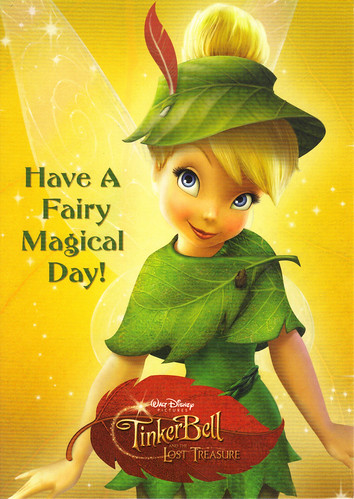
There's been so much "buzz" around the Disney Fairies, Tinkerbell and Pixie Hollow these past couple of weeks I don't even know where to start. I was initially thinking of posting about Tinkerbell's recent "makeover" (which actually isn't a makeover but rather just a new additional outfit she appears wearing in the new Disney Fairies direct-to-DVD Tinkerbell and the Lost Treasure), perhaps in comparison with other much discussed revamps of girls' culture characters Dora the Explorer, Strawberry Shortcake and Rainbow Brite. But style is just the tip of the iceberg when it comes to the new media powerhouse emerging out of the Fairies/Tinkerbell/Pixie Hollow media brand, which just seems to keep growing in both reach and success since the site's launch a couple of years ago.

Some of the more interesting/important developments right now revolve around the launch of the second Tinkerbell-based DVD, which of course comes with its own Nintendo DS tie-in game, both of which in turn tie-in to the Pixie Hollow virtual world. According to the press release, the new game creates even more linkages with the virtual world than the previous title (i.e. the original game/DVD released last fall). Considering how much of the virtual world (features and activities) are now exclusive to paid subscribers, this likely also ties in nicely with the velvet rope marketing model the site has increasingly oriented itself toward to accord with the VW's gains in population base and popularity. Here's an excerpt about the tie-in features taken from the press release (as published on Business Wire:
Unique to this year’s game is the ability for players to create and personalize up to five of their own fairies, from facial features to hair accessories, each with different talents focusing on tinkering, light, water, animal and gardening. One of those fairies can be uploaded onto the Disney Fairies Pixie Hollow (PixieHollow.com) virtual world from Disney Online, where visitors worldwide have created more than 22 million fairy avatars. Players are then able to use their DS fairy to go on quests, play talent games and gather items within the PixieHollow.com world.

Players can also embark on an online quest that ultimately unlocks a special item on both platforms and they can add ingredients gathered in the DS game to their collection on PixieHollow.com. The two platforms are now linked through up-to-date news and polls, dispatched from the online world directly to DS.

In addition, Disney Fairies: Tinker Bell and the Lost Treasure includes DGamer, the online community exclusive to Disney gamers on Nintendo DS, allowing players to connect with others and unlock Fairy-themed items in their DS game.

Interesting to see that Disney is still updating DGamer - I haven't checked in on that game/site in awhile, it might be time for a return visit to see if things have improved or expanded much since its soft launch last year. But anyway, without seeing them firsthand, the cross-platform features sound a lot like the Club Penguin virtual world/DS game campaign built around Secret Agents that emerged soon after Disney acquired the site. I think it might be time for a more formal comparison of the ways in which these tie-ins function, are marketed, and impact the virtual world space/community.

Another esp. noteworthy Tinkerbell news story that also (surprisingly, or perhaps even shockingly) ties into the launch of the Tinker Bell and the Lost Treasure DVD is the UN's announcement naming Tinkerbell an "Honorary Ambassador of Green". And then the UN screened the film at its New York headquarters, making it the site of the DVD's "world premiere". Bizarre! Here's an excerpt from the UN press release:
The United Nations today named the Disney animated character Tinker Bell an “Honorary Ambassador of Green” to help promote environmental awareness among children. The announcement came just prior to a screening at UN Headquarters in New York of the world premiere of the Walt Disney animated film, “Tinker Bell and the Lost Treasure.”

“We're delighted Tinker Bell has agreed to be our Honorary Ambassador of Green,” said Kiyo Akasaka, Under-Secretary-General for Communications and Public Information. “This beloved animated character can help us inspire kids and their parents to nurture nature and do what they can to take care of the environment.”

Today's event is intended to promote environmental awareness in the lead-up to the UN climate change conference in Copenhagen in December, where countries will aim to 'seal the deal' on a new global agreement to curb greenhouse gas emissions.

Okay...I had no idea that the UN was now part of the Disney promotional machine. I mean, using a beloved children's character as a kid-targeted "ambassador" is only ambiguously different from using a celebrity or sports hero, and there are of course promotional undertones anytime a media persona (real or fictional) gets involved in a campaign like this. Identifying Tinkerbell or any other Disney character built around the promotion of pro-environment values is in itself not so troubling - I've had these discussions with Amy Jussel before about using children's media characters to promote healthy foods. and overall I'm still open to the idea of using icons and themes from kids' culture for pro-social, pro-health and pro-environment type purposes. But all of that aside, it's the fact that this particular initiative announcement came as part of the promotional spectacle of the movie's (and game, books, toys, etc.) "premiere" (i.e. release date) that really stands out as odd, off and unworthy of the UN. This announcement is much too deeply embedded in the marketing of the film and much too in conformity with Disney's promotional interests to be seen as anything but a new and disturbing form of product placement.

Can't get enough Tinkerbell news? Disney Fairies is also an iPhone app now. Hmmm - there sure are a lot of kids' games coming in as iPhone apps. Looking forward to reading some research on parent/child co-use of iPhone devices for (cooperative?) gaming. ************Nov.5th update: And on that note, here are some emerging statistics courtesy of MarketingCharts, which indicate that: "More than 59% of US mothers who own an iPhone say they let their children use it, and 61% of these moms download games or educational content specifically for their kids." Hmmm - and what about dads?********

Not that Disney is the only one playing the transmedia game these days. The examples are endless. A recent, and also fairy themed venture Jan Bozarth's "Fairy Godmother Academy" book series/transmedia brand. As Omar L. Gallaga writes in yesterday's Statesman, Bozarth's book deal with Random House resulted from how well argued and organized her online/multimedia tie-ins were in her initial proposal; tie-ins that came with an existing media team at the "ready to begin work." Gallaga writes:
The staff is made up of designers and artisans whom Bozarth has worked with for about 15 years — the people she says she could trust to translate her detailed fantasy world into what Bozarth and the team call "Transmedia."

Explains Mario Champion, FGA's creative and technical director, "'Transmedia' is a shorthand way of saying the way kids play in a connected age. It's not just that it's digital — it's that it's connected."

Such connected media might mean a part of the Web site where girls can ask questions about or communicate with characters from the books, design their own virtual clothing or participate in a "Million Girl Choir," downloading audio tracks created by friends to combine with their own for a digital duet.

The ambitious project, which the team says will be rolled out over several years as the books are published, combines elements of massively multiplayer online games like "Club Penguin" with design tools, interactive music and video, and activities meant to get readers off the computer and into real-world activities with friends.

The interviews with the designers is well worth the read -- their comments tie into the whole girls' games discourse quite nicely and they have some interesting things to say about making space for UGC, craft and dress-up play, etc. But I can't help but sigh at the suggestion that transmedia is something new or innocuous or kid-based. Kids might play well with transmedia intertexts, but let's please not blame them for multi-modal branding. And the vast majority of the time the texts themselves are designed to maximize cross-promotion and incite multiple sites of consumption, rather than truly experiment with or tap into the opportunities contained within children's transmedia play practices.

I do like how the team presents its vision for the site/book/game, but only a thorough review of the contents themselves will tell if this is just another promotional strategy or something that's actually unique and postmodern. In particular, I think that future reviews (my own or yours) of the Fairy Godmother Academy's online components should focus on testing the following three statements that appear in Gallaga article:
"We're aiming to create a place where the books are a jumping-off place into this world of play and discovery, and of girls finding their own wisdom." ( - Ann Woods, art director of the Web site)

Here, the focus should be on opportunities for UGC or inter-user communication, flexibility of the system, opportunities for uploading original materials without usurping the kids' authorship or IP. Are kids able to engage with and subvert the source materials? If not, how are the books serving as a jumping off place. Where's the "discovery" occurring and what parameters are being placed on it?
In one example of the team's work, girls have the ability to not only choose virtual clothing, but to design it themselves.

What does 'design it themselves' amount to? Are we talking customization or real opportunities for original creations. If it's the former, what is the range of freedom and creativity afforded by the design/options available. What's the palette, what "sizes" are available, etc.?
"It's an intriguing balance," Woods said. "We never dumb down to girls."

This one's a bit harder to give a brief guideline for - what are some good ways to question or identify how games/sites "dumb down to girls" in their language and design. Then again, this might be the most intuitive one to detect. I'd love to see/read some good descriptions of what dumbing down is and what it looks like, so I'll leave this one open.


********On a totally different note:
Also, has anyone been watching the Jim Henson Company's new kids' animated TV program Dinosaur Train? Catchy tunes, cute characters, and some cleverly integrated educational content - I'm sure there are a zillion commercial tie-ins current or in development to consider and critique here too, but in the meantime the series itself seems delightful, intelligent and very Jim Henson-esque. Definitely worth keeping an eye on. Here's a clip to start the week off on a foot-tappingly good note.

Wednesday, October 14, 2009

The Kids' Comic Space

Part of the digital literacies discussions that I've been following of late have centered on the long-discussed (but not always applied) potential associated with using comics for intertextual, heavily visual, narrative formats through which kids can explore cultural themes, literature and learning. It's a fascinating idea that draws on the long history of comics, picture books, and transmedia intertexts within children's culture...while tapping into children's actual leisure practices in a way that transcends the usual boundaries between cultural categories (high/low culture, literature/entertainment, etc.) and gives some serious consideration to the value and possibilities contained within the re-emergence of comics as a literary form.

Not that comics have ever really gone anywhere, but they've certainly resurfaced within the mainstream in a big way these past few years -- a way that hasn't really been seen since, well, i'm not really sure when! (golden age? silver age?). I remember that Scholastic initiated a big push toward graphic novels and comics a number of years ago (e.g., click here to find out more about the launch of their Comix line back in 2005). And certainly, the emerging research on kids' reading habits within digital games and online environments is relevant to this discussion as well (e.g., Jackie Marsh's work on kids reading and writing in virtual worlds). Obviously, there are many more connections between this body of work and the research I'm doing on kids' games, and some cool possibilities of merging the two areas...not just thematically (which has been done before), but "ludic"ally as well. I still have a lot of catching up to do, and until my PhD is "in hand," this is definitely on the back-burner. But as a former comicbook collector and current reader of graphic novels (well, TPBs in my case), this whole realm definitely draws my attention.

Some neat places to start for finding out more about the kids' "comics space," and exploring its increased presence within both educational curriculum and kids' digital culture:

James Bucky Carter's En/Sane World - a repository of info and resources on "Sequential Art Narratives in Education (SANE)". His site includes lots of links and ideas for educators, as well as a variety of sources on "multigenre, multimodal, or otherwise "New" literacies."

The Online Visual Literacy Project - not just about comics, but appears to have some interesting background literature.

A short but sweet archive of comics-related posts on Media Macaroni, which includes a list of comics that the "cool kids" read and a great post about (as well as my first introduction to) Babymouse.

This excellent reading list of kids' comics posted by Jonathan Liu on GeekDad, in which he provides some great "off the beaten path" alternatives to the usual big name titles put out by Marvel and Disney (and yes - it was written in response to their partnership announcement this past summer).

Some of my own favourite kid-friendly titles (which I also posted in the comments section on GeekDad), that I would love to see more of within kids' digital culture:

Ted Naifeh’s Courtney Crumrin (think Harry Potter meets Hellboy meets Angry Little Girls)

Mike Kunkel’s Herobear and the Kid (actually anything by Astonish Factory is unique and all ages)

Jacob Chabot’s The Mighty Skullboy Army

And, although not always for kids, I really like the artwork and concept behind Roy Husada's Opera Manga, which he creates for the Vancouver Opera as a way of communicating/summarizing the storylines of upcoming performances to audiences. Very cool.

Of course, the renewed academic/press interest in comics, visual literacies and interactive storytelling is also in part being driven by kids themselves. For example, according to an article published last August in Publishers Weekly by Ada Price, web comics are being produced/created by younger and younger artists and writers, who are in turn benefiting from online distribution systems and exposure to land publishing deals with traditional book publishers. Again, nothing exceedingly new here...but the increased access (to younger age groups) and viability (in terms of potential for creators to actually generate an income from their artistic labour) are certainly keeping the topic relevant. I wonder how many actual "kids" are getting in on this, and I want to find out where they distribute their UGComics, and what the audience or community is like. I'm glad to see that this topic hasn't faded away and in fact appears to be gaining momentum. More links to come as I find them.

Friday, March 14, 2008

Check Out: AdAge's Kids Upfront 2008

The current edition of Advertising Age Online includes a nice assortment of US kids' media and marketing related articles, compiled together in a special feature called Kids Up Front 2008. I highly recommend reading these before they pass into archive, at which point a subcription is required (though affordable on a pay-per basis). Not only does AdAge have access to information the public does not (they commission and conduct a lot of proprietary research that sometimes then becomes available for purchase at exorbitant industry prices, and other times remains within AdAge's privilege to report), and hence is an excellent resource for free and cutting edge insider information that is not always available elsewhere. And I must say that for an industry publication, they include a (pleasantly) surprising number of critical articles, lots of analysis, and generally try to achieve a level of reflexivity that is otherwise sorely lacking within ad/marketing industry discourses. Of particular interest are a series of articles penned by Andrew Hampp, including this one on the kids' $1 Billion television industry, one co-authored with Emily York describing a surprising increase in food advertising spending despite the ongoing child obesity controversy (and self-regulatory commitments of the US food and beverage industries), an overview of Nickelodeon and all the money it's making through online (adver)games, and an exploration of PBS Sprout's decision to target parents instead of kids. It also includes some handy stats supplied by ComScore Media Matrix:

Monday, March 10, 2008

Virtual-to-Real World Play

March 11, 2008: Big oops! So, yesterday I mistakenly posted the article that I was trying to link to instead of posting my own write-up, an error I didn't notice until just now. Yikes! That original post was written by Virtual Worlds News, a great source for gaming news and for keeping track of the evolution of the virtual worlds industry. So, here's take two on Virtual-to-Real World Play.

******
By way of Virtual Worlds News, some nice liveblogging coverage of last month's Worlds in Motion Summit. The Summit itself included a number of fascinating talks from some of the world's leading game producers and designers, who discussed everything from advergames and virtual markets in Habbo Hotel, to content and technological convergence within various game environments. Of particular interest was a talk given by MindCandy's Michael Acton Smith on "Thinking Outside Virtual Worlds" and the company's newest game/toy/project Moshi Monsters -- a new virtual-to-real world kids' property that I first reported on in December, and set to launch sometime over the next couple of weeks. Like many of its contemporaries, Moshi Monsters bridges different forms of mediated play, using a "virtual pet" as the anchor. What I find unique about this project, is that the brand is incorporating mobile devices from the get-go, resulting in a property that (according to Virtual Worlds News) Acton Smith describes as "Tamagotchi mixed with Facebook and a little bit of Big Brain thrown in."

Commenting on the success of Webkinz, which although impressive still lags behind traditional toys such as Beanie Babies, Smith had this to say:
"So why, as a game designer, should we care? Why should we bother thinking beyond the screen?" Smith posited. One reason is that toy tie-ins are not only an additional revenue source, but they allow for a deeper connection with the users.

To which he added (according to VWN):
"I believe there’s still a huge amount of opportunity left in this space,” said Smith.

Game designers, though, need to start thinking “beyond the screen.” The revenue stream has too much potential not to. “More importantly,” said Smith, “it allows consumers to connect to our worlds and create more engagement and, hopefully, more fun.”

What makes online pets different from earlier, non-digital versions is, Acton Smith believes, their high levels of interactivity:
Setting online pets apart from Furbies...is the ease of interaction. From Webkinz to MyePets to Moshi Monsters, interaction is key. MindCandy, for example, is adding widgets aimed at its older audience to tie their pet experience to Facebook or Bebo. Once users add friends, the creatures will socialize even when the users are offline, generating a Facebook-style newsfeed to track activity.

For the younger audience, MindCandy is adding "stealth education” with changing vocabularies and puzzles tied to the in-game currency of “rocks,” with monsters adding new puzzles for their owners every day.

In terms of the larger industry trends, here's a quick run-down of what Acton Smith and Virtual Worlds News had to say about the key players in this area and where they've focused their virtual-to-real play efforts [****Note, this list is great, but incomplete - I can already think of a few that are missing, and will work on providing a more comprehensive list as soon as I get a chance****]:

- Webkinz: The plush toys for starters, as well as figurines, lip gloss, and other licensed products to monetize the interest in the brand.

- BarbieGirls.com and Be-Bratz: Are targeting older. Toys and accessories already available, more to follow.

- Collectible cards: A number of properties are expanding this way, including Bella Sara, Chaotic, Maple Story, and World of Warcraft.

- Virtual Paper Dolls and IRL (Fashion) Design: Moo.com (with Habbo), Stardoll, Zazzle, and FigurePrints.com all provide different tools that allow users to bring virtual fashions into the real world: by printing avatars on a T-shirt, or designing avatar clothes that can then be made IRL for the player, designing your own avatar-based figurine, etc.

- TestTubeAliens.com: Toy that detects screen patterns when held up to the computer screen, changing the mood of the "test tube alien" inside.

- UbFunKeys: Similar to Webkinz, but with plastic figurines instead of plush toys.

- Tamagotchi: Relaunched and updated to include an online world.

- Me2: According to VWN "A motion sensor that records your physical activity and then points to your virtual character at home, potentially promoting activity away from the sedentary lifestyle."

- iBuddy or Ambient Devices’ gadgets: Which "interface with your computer or environment to provide you more information, creating more of an augmented reality than a straight up virtual world, but creating possibilities, said Smith, for giving feedback to users away from their avatars."

To this we could add Neopets, which has long had its own line of plush toys, interactive figurines, collectible cards and console tie-in games...as well as Barbie i-Design and a slew of others...

...Including many of the properties represented in the last panel of the summit, which was (appropriately enough) entitled "Striking Gold: How Kids’ Worlds Took the Crown". The panel (moderated by game journalist Leigh Alexander) brought together a nunmber of heavy hitters within the kids' digital play landscape, including Paul Yanover (of Disney Online), Lane Marrifield (co-founder of Club Penguin), Jason Root (Senior VP of Nick.com & NickatNite.com) and Kyra Reppen (Senior VP of Neopets). Again, this is primarily a summary of first-hand coverage (to which I will add comments at a later date or incorporate into something else), this time provided by the Worlds in Motion blog, which I've divided up into the key questions/themes that appear (from reading the coverage at least) to have driven the discussion.

On the question of how each company initially decided to focus on the kids' market:
Paul Yanover (Disney): "[S]tarted off from "[the] revisionist side of things." In the 90's, Disney Imagineers began experimenting with virtual reality and “though that didn’t really pan out, that team built great tech and art” eventually those ideas became Toontown."

Lane Marrifield (Club Penguin): ""We didn’t have an identity to start with, other than we had kids." He discussed looking at what was available for kids, what they liked, what they didn’t." [We] map every decision we make around the experience of six year olds, well, my six year old really."

Jason Root (Nickelodeon): They "Saw patterns on how kids were using our site, and the web at large.” 84% of kids are playing games online. “We wanted to evolve into a ‘place’, we wanted to bring those things together” with focus on mixing branded and non-branded content.

Kyra Reppen (Neopets): "[T]here is a "[natural] emotional connection with pets." Their virtual world "just started out being fun, but it's endless how much can be done with it."

On how player loyalty is maintained, as well as how player feedback and input is used:
Kyra Reppen (Neopets): “It’s about listening to the users...we get 30,000 new accounts every day... we need to cater to them, but we also need to take care of the old users who’ve been there for over four years. They have different needs, they’re the experts. So listening to them, making new content every day, keeping them engaged is important. It’s up to us to keep them.”

Paul Yanover: "It’s all about participation, it’s about listening. It’s something they have to have ownership of. We don’t want to project something at them, they need that ownership.”

Jason Root: "For user generated content and professionally created content, it’s about balancing those. Some kids want more of one than the other, but we have to find that balance."

Lane Marrifield: “It [was] a whole different gig. The purist nature of creating something for kids helped set us in the right kind of decision making.... all we hoped [for] was it liked enough that we could build a sustainable business model. We just hired our first marketing person!”

On safety as a key feature (and selling feature):
Lane Marrifield: “We have over 120 people dedicated to the safety of Club Penguin. We don’t mess around with that. We knew that if we were going to build the trust of the parents, there was no margin for error there. Only one incident and it would’ve been over.”

As the Worlds in Motion coverage describes, "The company’s safety program was thorough enough that they were invited to an F.B.I conference on safety to give a talk. "We’re more focused on that then we are on the gaming community.""

On balancing play with profits:
Jason Root: [T]he difficulty lays in, "figuring out how stay true to the audience and [at the same time] how to make a viable business plan... feeding these sites, they need to be tended to."

Kyran Reppen: "It’s hard to get the payment mechanisms in [kids’] hands.” Which, according to the Worlds in Motion article, "is why pre-paid cards for online services have been a boon for them as well as others."

On how to keep kids playing the games as they grow older.
Kyran Reppen: "This generation of kids are growing up with virtual worlds as their play pattern. They’re going to grow up demanding new kinds of play patterns... I can only speak for what Neopets has done, and it speaks to constant innovation."

Lane Marrifield: "Frankly, that's part of the fun. It's not just about building it, it's about sustaining it. It needs to be a labor of love. Kids will smell a disingenuous product from a million miles away... you got to truly care about kids."